

Is 10 Gauge Aluminum Strong? Strength and Thickness
Table of Contents
- Is 10 Gauge Aluminum Strong? The Short Answer
- 10 Gauge Aluminum Thickness in Inches and Millimeters
- What Aluminum Tensile Strength Actually Tells You
- 10 Gauge vs 12 Gauge Aluminum: How Much Difference Does It Make?
- Aluminum Flagpole Wind Resistance: Why Gauge Is Only Part of the Story
- Common Mistakes When Judging Aluminum Strength
- Conclusion: What 10 Gauge Aluminum Means for Your Setup
- Frequently Asked Questions
Last Updated: October 16, 2026
Is 10 Gauge Aluminum Strong? The Short Answer
Is 10 gauge aluminum strong? Yes, for many real-world jobs.
Here at Armor Flagpoles, our telescoping flagpoles use 7000 T8 aluminum in a 10-gauge wall. This guide explains why that combination matters.
Strength in aluminum is never one number. It comes from three things:
- Thickness (the gauge)
- Alloy (what the metal is made of)
- Temper (how it was heat-treated)
Change any one of those and the same sheet behaves completely differently.
Most quick answers skip this. A 10-gauge sheet of soft, pure aluminum is not the same animal as a 10-gauge sheet of 7075-T6.
10 Gauge Aluminum Thickness in Inches and Millimeters
10 gauge aluminum measures about 0.1019 inches thick, or roughly 2.588 millimeters.
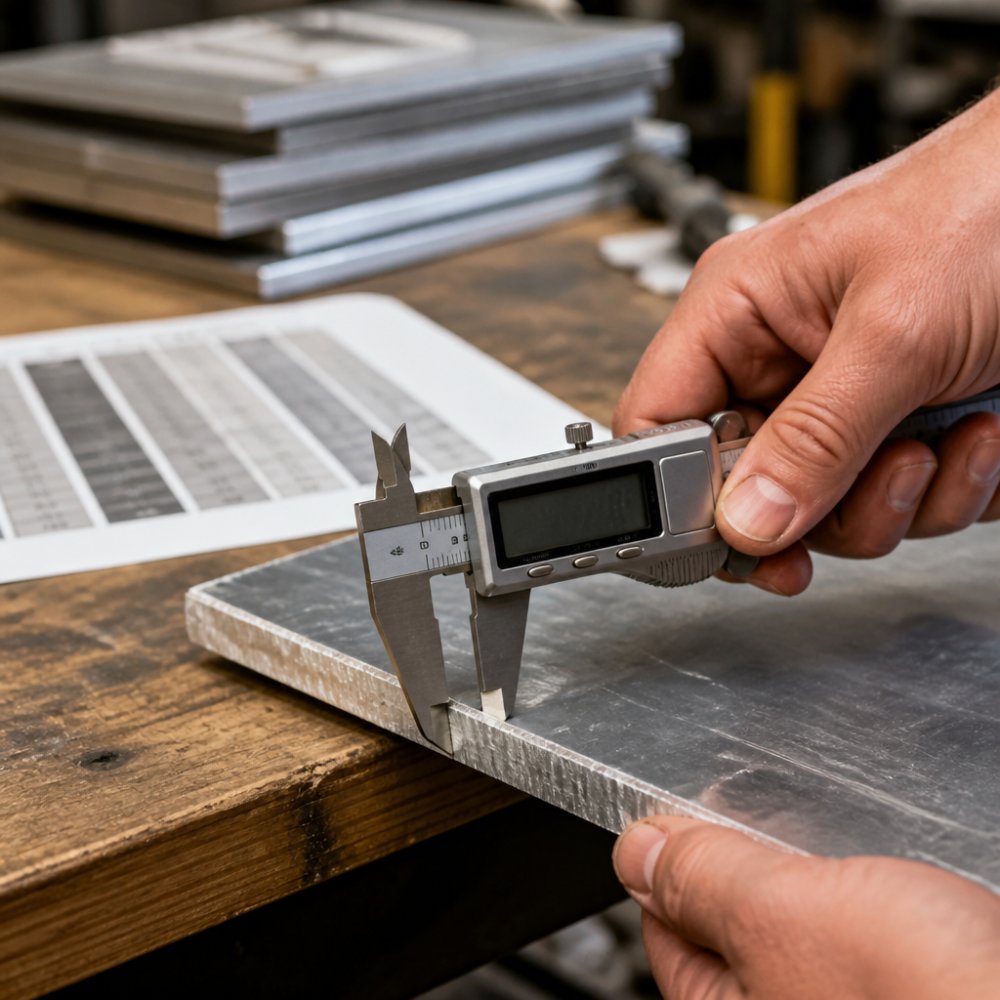
Here's the catch: gauge is not a universal measurement. The number means different things for different metals.
- Aluminum: 10 gauge = 0.1019 inches
- Steel: 10 gauge = 0.1345 inches
- Stainless steel: 10 gauge = 0.1400 inches
Same number, three different thicknesses. A 10-gauge steel panel is thicker than a 10-gauge aluminum one, which matters when swapping materials in a design.
The Aluminum Association's standard gauge references maintain these conversion values for the industry.
For reference, here's how aluminum gauges stack up:
| Gauge | Decimal Inches | Millimeters |
|---|---|---|
| 10 gauge | 0.1019 in | 2.588 mm |
| 12 gauge | 0.0808 in | 2.052 mm |
| 14 gauge | 0.0641 in | 1.628 mm |
| 16 gauge | 0.0508 in | 1.290 mm |
Notice the pattern: lower gauge number, thicker metal. A 10-gauge sheet is thicker than 12, 14, and 16 gauge.
What Aluminum Tensile Strength Actually Tells You
Aluminum tensile strength is the maximum stress a piece of metal can handle before it tears apart, measured in psi or MPa. It gets quoted a lot, but it's only one piece of the puzzle. What it doesn't tell you:
- How much the metal bends before it breaks
- How it handles repeated flexing
- How it behaves when you weld or bend it
Two more numbers fill in the gaps:
- Yield strength: the point where the metal stops springing back and stays bent
- Elongation: how far it stretches before failing
For structural work, yield strength usually matters more than tensile strength. A part that bends permanently under load has failed, even if it never cracks.
Why Alloy And Temper Change The Answer
At the same 0.1019-inch thickness, two 10-gauge sheets can behave like completely different materials. Alloy and temper drive that.
Common sheet alloys fall into rough families:
- 1000 series (commercially pure): very formable, very weldable, low strength. Best for trim, ductwork, and decorative work where bending matters more than load.
- 3003 (manganese): the general-purpose workhorse. Moderate strength, good corrosion resistance, easy to form and weld. Common in panels, enclosures, and tanks.
- 5052 (magnesium): noticeably stronger than 3003 with excellent corrosion resistance, especially in marine air. A frequent pick for boat panels, fuel tanks, and outdoor enclosures.
- 6061 (magnesium + silicon): heat-treatable and machinable. In the T6 temper it's a common structural choice for brackets, frames, and chassis parts.
- 7075 (zinc): among the strongest aluminum alloys available, with strength in the range of some steels at a fraction of the weight. Used in aircraft structures and high-stress components. It is harder to weld and less corrosion-tolerant than 5052 or 6061 in some environments.
Temper matters just as much. The same 6061 sheet in annealed O temper is soft and easy to bend; in T6 it is roughly three times stronger but far less forgiving at tight bend radii.
So when someone asks if 10 gauge aluminum is strong, the honest answer is: it depends on the alloy and temper behind it.
How To Read A Spec Sheet Without Getting Fooled
When you compare aluminum specs, check yield strength, not just tensile strength. Yield tells you when the part stops doing its job. Then check three more things:
- Temper designation. A strength number without a temper is incomplete.
- Formability. High-strength tempers resist bending. If your design has tight radii, that trade-off matters.
- Corrosion environment. A stronger alloy that pits in salt air may lose to a slightly weaker, more corrosion-resistant one.
This is also why material tensile strength is not a complete flagpole wind rating. A pole can use excellent aluminum and still perform poorly if the sections are thin, the overlaps are short, or the mount is undersized. The finished assembly is what meets the wind.
10 Gauge vs 12 Gauge Aluminum: How Much Difference Does It Make?
10 gauge aluminum is about 26% thicker than 12 gauge. That sounds modest, but bending stiffness rises with the cube of thickness, so a small jump in thickness creates a much bigger jump in rigidity.
Here's the practical breakdown:
| Factor | 10 Gauge | 12 Gauge |
|---|---|---|
| Thickness | 0.1019 in | 0.0808 in |
| Weight | Heavier | Lighter |
| Rigidity | Higher | Lower |
| Formability | Harder to bend | Easier to bend |
| Best For | Structural parts, high-stress panels | Light panels, trim work |
Neither gauge is "better." Pick 10 gauge when the part takes real load, faces impact, or needs to stay flat over a long span. Pick 12 gauge when weight savings matter more than stiffness.
Why Span And Load Matter More Than Gauge Alone
Thickness is only half of the deflection story. The other half is how far apart the supports are and how much load sits between them.
That's why two people can both buy "10 gauge" and get very different results. The gauge is identical; the geometry is not.
20 Ft Superior 1 Telescoping Flagpole Kit →
A few practical patterns show up again and again:
- Short spans, heavy load: 10 gauge shines. Think brackets, mounting plates, and reinforcement panels.
- Long spans, light load: 10 gauge may be overkill. A thinner gauge with a stiffening rib or a folded edge can do the same job with less weight.
- Long spans, heavy load: thickness alone rarely solves it. Adding a rib, a bend, or a support point usually beats going thicker.
For a real number, you need the actual span, load, and the alloy's modulus of elasticity, engineering calculations, not catalog lookups. For anything safety-related, have a qualified engineer run them.
A Quick Decision Guide By Application
Use this as a starting point, not a substitute for engineering review:
- Flat panels and enclosures: 10 gauge holds shape well and resists denting. 12 gauge is often enough if the panel is small or supported on all four edges.
- Floors and decks: 10 gauge is a common minimum for foot traffic over short spans. Longer spans usually call for a thicker section, a stiffener, or a different material.
- Brackets and mounting plates: 10 gauge works well when the load path is short and the part is bolted on multiple sides.
- Trim and cosmetic covers: 12 to 16 gauge is usually plenty. Going thicker just adds weight.
- Anything load-bearing or safety-critical: stop and get an engineer involved. Gauge charts don't cover this.
Joining, Fastening, And Edge Behavior
The finished part is only as strong as its connections. Keep these in mind:
- Welding: 6061 and 7075 lose strength in the heat-affected zone unless the part is re-aged. 5052 and 3003 weld more predictably. If the weld is structural, plan for the strength loss.
- Fasteners: bolts and rivets concentrate stress at the hole. Edge distance and hole spacing matter as much as the sheet thickness.
- Cutouts: every hole, slot, or notch interrupts the load path. A large cutout in a 10-gauge panel can weaken it more than dropping to 12 gauge without the cutout.
- Unsupported edges: a free edge can buckle or flutter under load even when the panel's center is stiff. Folded flanges and hemmed edges add rigidity cheaply.
Bend Radius And Forming
10 gauge aluminum needs a generous bend radius. The exact minimum depends on alloy and temper, but softer tempers bend tighter and harder tempers need more room. Go too sharp and you'll see stress cracks along the fold.
The trade-off is always the same: thicker metal means more strength and weight, plus more force to form and more attention to how the part is joined and supported.
Aluminum Flagpole Wind Resistance: Why Gauge Is Only Part of the Story
Aluminum flagpole wind resistance depends on far more than wall thickness. Gauge is one input among several.
A flagpole's ability to stand up to wind comes from the whole system:
- Wall thickness (the gauge)
- Alloy and temper
- Pole diameter and taper
- Section overlap on telescoping poles
- The mount and base
- Flag size
This is where shoppers get misled. A spec sheet listing "10-gauge aluminum" tells you the wall is thick, not the pole's wind rating. Those are two different things.
Material tensile strength is not a complete flagpole wind rating.
At Armor Flagpoles, we pair 7000 T8 aluminum with a 10-gauge wall.
If you live on a coastline or in a gusty area, ask three questions before you buy:
- What alloy and temper does the pole use?
- What is the wall thickness?
- What does the maker say about wind, and how was that tested?
Common Mistakes When Judging Aluminum Strength
The biggest mistake is treating gauge as the whole answer. Here are the traps we see most often.
Mistaking tensile strength for wind rating. A high tensile number describes the metal, not the finished pole.
Skipping the mount. The strongest pole in the world fails if the mount can't hold it.
Overbuilding. Heavier isn't always better. Extra thickness adds weight, cost, and difficulty. Match the gauge to the job.
Assuming one gauge fits all. A 10-gauge wall suits a heavy-duty pole. A lightweight display stand may only need 16 gauge.
Conclusion: What 10 Gauge Aluminum Means for Your Setup
So, is 10 gauge aluminum strong? Yes, when paired with the right alloy and temper. At about 0.1019 inches, it's a heavy-duty thickness that resists bending and holds up under load.
That's why our telescoping flagpoles use 7000 T8 aluminum with a 10-gauge wall. We also match the included flag, solar light, and hardware to each pole, so you're not chasing down compatible parts.
If you want a flagpole built for real weather, start by checking the specs that matter: alloy, temper, wall thickness, and how the pole is mounted.
Frequently Asked Questions
Is 10 gauge aluminum strong?
For most outdoor and structural work, yes. At about 0.1019 inches (2.588 mm) thick, 10 gauge aluminum is a heavy-duty sheet thickness. In a strong alloy like 7000-series with a T8 temper, it resists bending and denting well. How strong it feels in practice depends on the alloy, the temper, the span between supports, and the load it carries. Armor Flagpoles uses 7000 T8 aluminum at 10 gauge in its telescoping flagpoles.
How does 10 gauge vs 12 gauge aluminum compare?
A 10 gauge aluminum sheet measures about 0.1019 inches (2.588 mm). A 12 gauge sheet is roughly 0.0808 inches (about 2.05 mm). The 10 gauge sheet is around 26% thicker, which raises stiffness and dent resistance. That difference matters most on long spans, in high-wind areas, or anywhere the metal takes repeated impact rather than sitting still.
Does thicker aluminum always make a flagpole more wind-resistant?
No. Aluminum flagpole wind resistance depends on the alloy, temper, wall thickness, pole diameter, section overlap on telescoping poles, and how the pole is mounted. A thicker wall helps, but a pole with the wrong alloy or a weak mount can still fail in a gust. Check the full specification and the mounting method, not the gauge number alone.
How can I tell whether an aluminum flagpole is right for my flag size?
Match the flag size to the pole's rated capacity, then check the alloy, wall thickness, and mount. A pole rated for a larger flag carries a smaller one fine, but oversizing the flag on a light pole adds wind load the pole was not built for. If you are unsure, ask the seller for the recommended flag size for the exact model before you buy.
Choosing a flagpole for a windy coastline or an open property comes down to more than one number. Armor Flagpoles builds telescoping flagpoles from 7000 T8 aluminum with a 10-gauge wall, matches the included flag, solar light, and hardware to each pole, and backs every one with a 15-year factory warranty and Tanker Tough hardware. Visit Armor Flagpoles to compare models and find the setup that fits your property.