

Is a Permanent Flagpole Worth the Investment
Table of Contents
- What Makes a Permanent Flagpole Worth Considering
- Permanent Flagpole Pros and Cons
- Telescoping vs Permanent Flagpole: What Matters
- Permanent Flagpole Installation Cost Breakdown
- Residential Flagpole Height Guide
- Long-Term Value and Durability
- Maintenance, Permits, and Hidden Costs
- Is a Permanent Flagpole Right for You
- Frequently Asked Questions
Last Updated: October 20, 2026
What Makes a Permanent Flagpole Worth Considering
A permanent flagpole is worth the investment when you want a durable flag display that lasts for years.
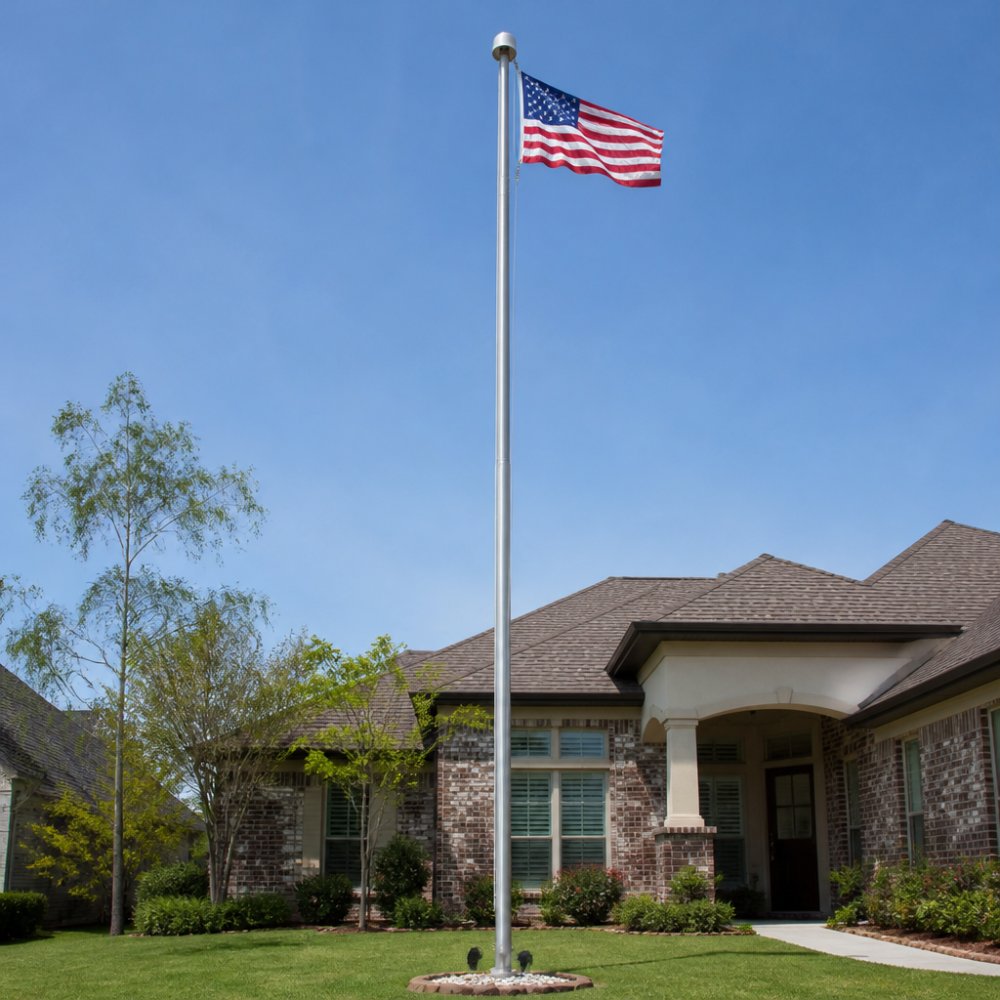
Telescoping flagpoles offer a permanent solution that stays in place. You lower the pole to change flags instead of working at height.
A permanent flagpole installation makes your flag display part of your home's landscape. Unlike portable options, it won't blow over in wind or need seasonal storage.
Consider a permanent flagpole if you plan to stay in your home for several years. The upfront cost is higher, but you avoid replacing cheaper poles every few seasons.
Permanent Flagpole Pros and Cons
A permanent flagpole is a long-term purchase, so it helps to see the real trade-offs in plain terms.
Strengths of a Permanent Installation
A permanent flagpole delivers consistent curb appeal because the display is always ready. You never set up and take down a portable pole.
Durability is the core advantage. Our poles use 10-gauge 7000-T8 aluminum, which resists corrosion from salt spray and repeated wind exposure. Thicker walls help the pole hold its shape through weather cycles.
Long-term value comes from service life. Cheaper poles can rust or develop stuck sections within a few years. A well-built permanent flagpole can last for many seasons, spreading the upfront cost.
The included solar light works automatically. It charges during the day and illuminates your flag at night with no wiring and no batteries to replace. That keeps the display visible after dark without adding an electrical project.
Realistic Drawbacks to Know
Installation requires concrete work: dig a hole, set a ground sleeve, and pour concrete around the base.
Permits may be required. Check local codes before installation. Some municipalities limit flagpole height or require setback distances from property lines. Utility locates are essential before you dig.
Removal is difficult if you move. Taking out an installed pole means breaking concrete and extracting the ground sleeve. Portable options suit people who relocate frequently.
Maintenance is modest but not zero. Occasional cleaning and hardware checks keep the pole operating smoothly. Salt air and harsh weather demand more attention.
Weather events can happen. Even quality poles can sustain damage in extreme conditions. Wind gusts, ice loads, or lightning strikes are possible, and no pole is storm-proof.
A Simple Decision Framework
Use these questions to weigh the pros and cons against your situation.
- How often will you fly the flag? Daily or near-daily display favors a permanent pole. Occasional display favors a portable option.
- How long will you stay? Five or more years makes the upfront cost easier to justify. Frequent moves favor flexibility.
- What is your wind exposure? Coastal or high-wind sites benefit most from heavy-duty construction.
- How much maintenance will you accept? A permanent pole needs occasional cleaning and hardware checks.
- Is your yard ready? You need a clear spot away from power lines, trees, and structures, with ground accessible for digging.
If most answers point toward long-term display, a permanent flagpole is likely worth the investment. If flexibility matters more, a portable option may fit better.
Telescoping vs Permanent Flagpole: What Matters
The choice between telescoping and permanent flagpole designs comes down to your needs and property.
Telescoping flagpoles extend and lower smoothly. You operate them from the ground without external ropes or pulleys. Five sections telescope into each other for compact storage when lowered.
Permanent flagpole installation means the pole stays up year-round as a fixed part of your landscape. You lower it only to change flags or perform maintenance.
Both designs can be permanent installations. The real difference is operational. Telescoping poles give you flexibility to lower the display for access. Fixed poles stay extended at all times.
For residential properties, telescoping permanent flagpoles offer the best balance. You get the durability of a permanent installation with the convenience of lowering the pole when needed.
Permanent Flagpole Installation Cost Breakdown
Understanding costs helps you budget realistically. The total investment includes equipment, materials, and labor.
Equipment and Materials
Our 20 Ft Superior 1 Telescoping Flagpole Kit is $855.00 and includes the pole, solar light, ground sleeve, flag, and hardware.

The 20 Ft Heavy Duty Superior 2 costs $1,150.00. It features a larger 3½-inch base and a more powerful 566-LED solar light. The bigger base provides extra stability in wind.
For taller displays, the 25 Ft Heavy Duty Superior 2 is $1,200.00. The 30 Ft Superior 2 is $1,595.00. Height matters for visibility on larger properties or waterfront locations.
The 16 Ft Classic Telescoping Flagpole Kit is $765.00. It suits smaller residential yards and offers the same 15-year warranty as larger models.
All kits include the flag, solar light, ground sleeve, stainless-steel clips, and ball topper. You're not hunting for compatible parts.
Labor and Site Preparation
Professional installation typically costs extra, depending on your location and ground conditions. Digging the hole, setting the ground sleeve, and pouring concrete take time and equipment.
DIY installation saves labor costs. You'll need a shovel, concrete mix, and a few hours. Rocky soil or clay takes longer than sandy ground.
Ground preparation is critical. The ground sleeve must be level and stable. Poor preparation leads to leaning poles or movement over time.
Residential Flagpole Height Guide
Choosing the right height ensures your flag displays properly and stays safe.
The 16 Ft Classic Telescoping Flagpole works well for homes on standard residential lots. It clears rooflines and trees without dominating the landscape. The 2.4-inch base diameter fits most ground conditions.
20 Ft Superior 1 Telescoping Flagpole Kit →
The 20 Ft Superior 1 is our most popular residential choice. It offers enough height for visibility without overwhelming most properties. The 2¾-inch base provides solid stability.
The 20 Ft Heavy Duty Superior 2 uses a 3½-inch base for extra wind resistance. Choose this if you live in a high-wind area or want maximum stability.

The 25 Ft and 30 Ft Superior 2 poles suit larger properties or waterfront locations. They provide prominent flag displays on spacious grounds.
Long-Term Value and Durability
A permanent flagpole is worth the investment when its service life and low upkeep outweigh the upfront cost. Here is how ownership costs, site conditions, and durability play out.
Total Cost of Ownership Over Time
Total cost of ownership includes the pole kit, installation materials, replacement flags, maintenance, and repairs.
- Upfront equipment: Our kits bundle the pole, flag, solar light, ground sleeve, and stainless-steel hardware. Bundling reduces the work of finding compatible components.
- Installation materials: Concrete mix and basic tools are the main DIY costs. Professional installation adds labor, which varies by region and ground conditions.
- Replacement flags: Flags wear out faster than poles. Expect to replace the flag periodically depending on sun, wind, and display frequency.
- Maintenance: Occasional cleaning and hardware checks are low-cost. Stainless-steel hardware resists corrosion and reduces replacement frequency.
- Repairs: Rare for quality poles, but extreme weather can cause damage. A warranty helps offset covered defects.
A quality permanent flagpole can cost less over 10 to 15 years than replacing cheaper poles several times. The exact break-even depends on your climate and how often you fly the flag.
How Site Conditions Affect Lifespan
Wind exposure, flag size, pole height, and material all interact. A larger flag catches more wind, increasing load on the pole. Taller poles see higher wind loads at the top. Coastal salt spray accelerates corrosion on lesser materials.
Freeze-thaw cycles can stress foundations and hardware. Seasonal flag removal during severe storms reduces risk. Checking the ground sleeve and hardware after winter helps catch issues early.
Material tensile strength alone is not a complete wind rating. Real-world performance depends on wall thickness, base diameter, flag size, and installation quality. Choose a heavier-duty model if your site sees frequent high winds.
What Durability Looks Like in Practice
Our 10-gauge 7000-T8 aluminum construction resists bending and corrosion. This thickness helps the pole hold its shape through wind gusts and weather cycles.
The 15-year warranty covers the aluminum sections. That reflects confidence in material quality. Cheaper poles can fail within 3 to 5 years from rust or stuck sections.
Stainless-steel hardware resists corrosion. Salt spray and moisture will not damage clips, bolts, or the ball-bearing swivel. Standard steel hardware can rust quickly in coastal environments.
The telescoping design simplifies maintenance. You lower the pole to inspect connections and clean the surface. Access to all sections prevents corrosion buildup in hidden areas.
Maintenance, Permits, and Hidden Costs
Planning ahead prevents surprises after installation.
Maintenance is straightforward. Rinse the pole occasionally with fresh water to remove salt spray or dust. Check stainless-steel clips and the ball-bearing swivel for smooth operation. No special tools or expertise required.
Permits vary by location. Contact your local building department before digging. Some areas require permits for poles over 20 feet, and setback distances may apply.
Concrete work is a one-time cost. Once the ground sleeve is set and concrete cures, the foundation is permanent. Proper installation prevents settling or movement.
Flag replacement costs money over time. Our kits include one flag. Additional flags, different sizes, or seasonal flags are purchased separately.
Lighting is included. The solar light requires no wiring or batteries. Occasional cleaning keeps the solar panel efficient.
Is a Permanent Flagpole Right for You
Ask yourself these questions to decide.
Do you plan to stay in your home for several years? Permanent installations make sense for long-term residents.
Does your property have space for installation? You need a clear spot away from power lines, trees, and structures.
Can you handle the upfront cost? Quality permanent flagpoles cost more than temporary options.
Do you want daily flag display? A permanent flagpole keeps your flag flying without seasonal setup.
Do you live in high-wind or coastal areas? Heavy-duty construction pays dividends in harsh weather.
A permanent flagpole worth the investment is the right choice when durability, convenience, and long-term value matter more than flexibility.
Ready to add a quality flagpole to your property? Explore our selection of residential flagpoles.
| Model | Height | Base Diameter | Best For | Starting Price |
|---|---|---|---|---|
| Classic | 16 ft | 2.4 inches | Standard residential yards | $765.00 |
| Superior 1 | 20 ft | 2¾ inches | Most homes and small properties | $855.00 |
| Superior 2 (20 ft) | 20 ft | 3½ inches | High-wind areas | $1,150.00 |
| Superior 2 (25 ft) | 25 ft | 3½ inches | Larger properties | $1,200.00 |
| Superior 2 (30 ft) | 30 ft | 3½ inches | Waterfront and spacious grounds | $1,595.00 |
Frequently Asked Questions
What's the difference between a telescoping and permanent flagpole?
Telescoping flagpoles lower for flag changes and store compactly, ideal for RVs and those who want flexibility. Permanent flagpoles stay fixed in concrete, offering a stable display but requiring professional installation and ground preparation. Telescoping poles cost less upfront ($765-$1,595) and suit most homeowners. Permanent installations demand more labor and site work but eliminate portability concerns.

How much does it cost to install a permanent flagpole?
Equipment ranges from $765 to $1,595 depending on height and features. Installation labor, concrete, site preparation, and permits are additional costs. Telescoping poles telescope into a ground sleeve without extensive excavation.
What height flagpole should I choose for my home?
A 16-foot telescoping flagpole suits most residential properties and standard flag sizes (3×5). For larger yards or waterfront properties, 20-25 feet works well with 4×6 flags. Check roof clearance and sight lines before deciding. Taller poles create more visual impact but require more space and stable ground. Start by measuring your lawn width and imagining the pole in proportion to your home.
Do I need permits to install a flagpole at my home?
Permit requirements vary by location and HOA rules. Many areas require permits for permanent installations, especially those over 20 feet or near property lines. Check with your local building department before digging. Some HOAs restrict flagpole height or placement. Calling ahead prevents costly mistakes and delays. Telescoping poles may need fewer permits since they don't require deep excavation.
How long does a flagpole last, and what maintenance does it need?
Quality aluminum flagpoles last 15+ years with minimal maintenance. Inspect hardware annually, rinse salt spray monthly in coastal areas, and replace flags when faded. Telescoping poles lower for easy cleaning and flag changes. A 15-year warranty covers most defects, but regular care extends lifespan significantly.