

Telescoping Flagpole Wind Rating Guide: What to Know
Table of Contents
- How Telescoping Flagpole Wind Ratings Are Calculated
- 7000 T8 Aluminum Flagpole Benefits: Why Material and Gauge Matter
- Best Residential Flagpoles for High Winds: Specs That Hold Up
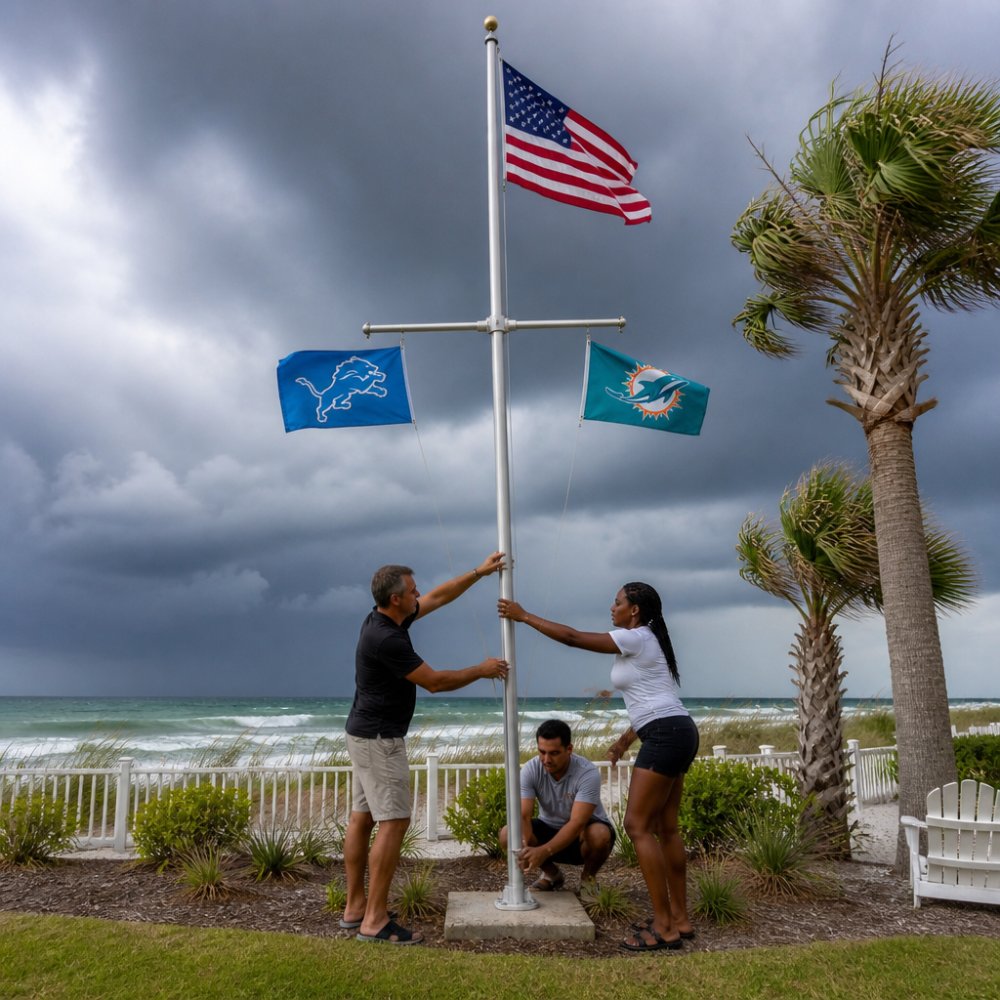
- When to Lower Your Flagpole in a Storm
- Installation, Soil, and Foundation Impact on Wind Performance
- Maintenance, Accessories, and Failure Points to Watch
- Conclusion
- Frequently Asked Questions
Last Updated: September 26, 2026
How Telescoping Flagpole Wind Ratings Are Calculated
Wind ratings get quoted constantly, but almost nobody explains where they come from. A telescoping flagpole wind rating is the maximum sustained wind speed a pole is engineered to survive based on its material strength, wall thickness, base diameter, and the surface area of whatever you attach to it. This guide from Armor Flagpoles breaks down what those numbers actually measure, and why the flag you fly changes the math entirely.
Wind Load, mph Ratings, and What They Actually Measure
Wind load is the force wind exerts on a surface, and it scales with the square of wind velocity. Double the wind speed and you roughly quadruple the pressure. A pole that shrugs off 60 mph gusts can be stressed hard at 100 mph. Static load is steady pressure; dynamic load adds gusting, vibration, and flag whip.
The working relationship most engineers use looks like this:
F = 0.00256 × V² × A × Cd
Wind Speed |
Pressure (psf) |
|---|---|
30 mph |
~2.3 |
60 mph |
~9.2 |
90 mph |
~20.7 |
100 mph |
~25.6 |
120 mph |
~36.9 |
Why the Flag Changes Everything
A 4x6 flag adds 24 square feet of surface area. A 5x8 adds 40. A 6x10 adds 60. Manufacturers rate poles bare, so a "100+ mph" claim assumes no flag. Fly fabric in coastal emerald coast winds and the effective load can climb sharply.
Pole Height |
Recommended Max Flag |
Exposed-Coast Max Flag |
|---|---|---|
20 ft |
4x6 |
3x5 |
25 ft |
5x8 |
4x6 |
30 ft |
6x10 |
5x8 |
Telescoping vs. Sectional Performance Under Load
Telescoping poles concentrate stress at the joints between sections, while sectional poles concentrate it at the couplers. In practice, telescoping designs handle gust loading better because the joints are shorter and the load path is more continuous, but only if the sections are fully extended and locked. A partially extended telescoping pole is the worst of both worlds: less height, more leverage, and joints that aren't seated.
7000 T8 Aluminum Flagpole Benefits: Why Material and Gauge Matter
The 7000 T8 aluminum flagpole benefits come down to tensile strength and stiffness. The T8 temper is a heat-treated condition that pushes 7000-series aluminum toward the top of the strength range for pole material, so a thinner wall carries more load without bending. That matters most where gust resistance is non-negotiable.
Wall Thickness, Base Diameter, and Pole Taper
Wall thickness, or gauge, sets how much bending force a section tolerates before it deforms. A larger base diameter widens the footprint and resists overturning. Pole taper distributes stress from the base up through the telescoping joints, where most failures start.
Best Residential Flagpoles for High Winds: Specs That Hold Up
The best residential flagpoles for high winds share three traits: thick 10-gauge walls, a wide base diameter, and a genuine all-weather warranty. For a 20-foot pole, a 3½-inch base with five telescoping sections gives you more structural integrity than a 2¾-inch base at the same height.
Model |
Height |
Base Diameter |
Material |
Warranty |
|---|---|---|---|---|
25 ft |
3½ in |
10-gauge 7000-T8 |
15-year |
|
Heavy Duty Superior 2 |
20 ft |
3½ in |
10-gauge 7000-T8 |
15-year |
Superior 2 Nautical |
25 ft |
3½ in |
10-gauge 7000-T8 |
15-year |
Superior 2 Nautical |
20 ft |
3½ in |
10-gauge 7000-T8 |
15-year |
Superior 1 |
20 ft |
2¾ in |
10-gauge 7000-T8 |
15-year |
When to Lower Your Flagpole in a Storm
Installation, Soil, and Foundation Impact on Wind Performance
Soil and foundation decide whether a strong pole stays upright. Loose sand, saturated clay, and shallow sleeves all reduce anchoring strength, so a pole that survives on packed ground can lean in soft coastal soil. This is the gap most wind-rating guides ignore: a 100+ mph pole rating means nothing if the ground gives way at 60.

Regional Wind Zones and What They Demand
The ASCE 7 wind hazard maps divide the country into wind zones by basic wind speed. Coastal zones along the Gulf and Atlantic seaboard routinely see basic wind speeds of 130-150 mph, while inland zones often sit at 90-115 mph. That difference should drive your foundation, not just your pole choice.
25 Ft Heavy Duty Superior 2 Telescoping →
Zone |
Typical Basic Wind Speed |
Foundation Implication |
|---|---|---|
Coastal high-wind (Gulf/Atlantic) |
130-150 mph |
Deeper sleeve, wider concrete collar, engineered anchoring |
Inland moderate |
90-115 mph |
Standard sleeve depth with compacted backfill |
Low-wind interior |
85-90 mph |
Minimum sleeve depth, standard backfill |
Concrete Depth and Sleeve Sizing
A common pattern among installers working coastal properties is to set the ground sleeve so that buried depth equals roughly 20% of the pole's above-ground height, with a minimum of 24 inches. For a 25-foot pole, that's about 5 feet of buried sleeve. In sandy or saturated soils, add 6-12 inches and widen the concrete collar.
Soil Type Changes the Math
- Packed clay or compacted fill: Best case. Standard depth works.
- Loose sand: Sleeve can migrate. Add depth and widen the collar.
- Saturated or organic soil: Worst case. Consider a helical anchor or engineered footing.
- Rock or coral: May require core drilling and grouting rather than a driven sleeve.
Installation Best Practices for High-Wind Areas
- Confirm your ASCE 7 wind zone before you dig.
- Match sleeve depth to pole height and soil type.
- Use a concrete collar, not just backfill, in coastal zones.
- Verify drainage so water doesn't undermine the sleeve.
- Re-check plumb after the first storm season.
Get the foundation right and the pole's wind rating becomes meaningful. Skip it and you're trusting a number that was never tested against your ground.
Maintenance, Accessories, and Failure Points to Watch
Accessories fail before poles do. Swivel harnesses, clips, and cleats take constant motion and salt exposure, so inspect them each season. A sticking telescoping joint usually means grit or corrosion, not a bent section.
- Rinse salt spray off sections and hardware monthly in coastal areas
- Check swivel rings and clips for wear before storm season
- Do not lubricate telescoping joints per the setup instructions (no wd 40)
- Confirm the flash collar and ground sleeve stay seated
- Replace worn clips before they scar the pole finish
Conclusion
Coastal and high-wind properties punish flagpoles that look strong on paper but fail once a flag loads them. Armor Flagpoles offers telescoping flagpoles built from 10-gauge 7000-T8 aluminum with a 3½-inch base, a ball-bearing swivel ring system to help prevent tangling, and a 15-year all-weather factory pole warranty. Get started with Armor Flagpoles and fly your flag with confidence, storm after storm.
Frequently Asked Questions
Which flagpole will withstand the strongest wind?
A telescoping flagpole with a high wind rating, such as those made from 7000 T8 aluminum with a 10-gauge wall thickness, will withstand the strongest winds. For example, Armor Flagpoles' heavy-duty models are engineered for extreme conditions. However, the flag itself increases wind load, so always check the manufacturer's rating with the flag attached and lower the pole during severe storms.
What is the difference between a flagpole's wind rating with and without a flag?
A flagpole's wind rating without a flag reflects the pole's structural capacity alone. Once a flag is attached, the flag acts as a sail, increasing surface area and drag, which significantly reduces the maximum safe wind speed. For instance, a pole rated for 100 mph without a flag may only handle 50 mph with a 4x6 flag. Always follow the manufacturer's rating for the specific flag size you fly.
Why is 7000 T8 aluminum superior for high-wind environments?
7000 T8 aluminum offers higher tensile strength and shear strength than common 6000-series alloys. Its 10-gauge wall thickness provides greater rigidity, reducing bending and fatigue under gusty conditions. This makes it ideal for coastal areas with salt spray and hurricane-force winds, as it resists corrosion and maintains structural integrity longer than thinner or lower-grade aluminum.
How do I know when it is time to lower my telescoping flagpole?
Lower your telescoping flagpole when sustained winds reach 25-30 mph or when gusts exceed 40 mph, especially if a flag is attached. Also lower it before a storm with predicted high winds, and if you notice excessive swaying or bending. Telescoping poles make this easy: simply retract the sections. This preventive step protects both the flag and the pole, extending its lifespan.
What does a 15-year all-weather factory warranty actually cover?
A 15-year all-weather factory warranty typically covers defects in materials and workmanship of the pole itself, such as structural failure under normal use. It does not cover damage from misuse and improper installation. Always read the warranty terms; for example, Armor Flagpoles provides a 15-year factory pole warranty and a 1-year warranty on parts and accessories.
How does coastal wind speed affect the structural integrity of a telescoping pole?
Coastal areas often experience higher sustained winds and salt spray, which can accelerate corrosion and fatigue. Telescoping poles with 7000 T8 aluminum and stainless-steel hardware resist these effects better. However, repeated exposure to high winds can loosen telescoping joints and swivel harnesses. Regular maintenance, including cleaning and lubricating joints, and lowering the pole during storms, preserves structural integrity.