

Anodized Aluminum vs Coastal Finishes for Beach Homes
Last Updated: November 5, 2026
Quick Summary
Anodized aluminum is worth it for beach homes where salt spray and wear are heaviest, such as ocean-side railings and exposed trim. Anodizing grows a thick oxide layer from the metal itself, which helps prevent pitting in marine air. Sheltered or color-matched parts can use powder coating instead.
- Anodizing grows its oxide layer from the aluminum itself rather than sitting on top.
- A ten-year study found anodic aluminum oxide prevented extensive pitting, especially at marine sites.
- Score each surface as high, moderate, or low exposure before choosing a finish.
- Specify anodizing to the AAMA 611-14 standard and ask for the thickness in writing.
- Rinse exposed surfaces with fresh water regularly, especially after storms.
Table of Contents
- Why Finish Choice Matters Near the Coast
- How Anodized Aluminum Handles Salt Air
- Anodized vs. Powder-Coated Aluminum
- How Long Anodized Aluminum Lasts Outdoors
- Aluminum for Saltwater Environments: How Exposure Changes the Answer
- Coastal Aluminum Maintenance and Cleaning
- Choosing the Right Finish for Each Part of Your Beach Home
- Frequently Asked Questions
Why Finish Choice Matters Near the Coast
Anodized aluminum is a strong choice for a beach home, but it is not the answer for every part of the house. Salt air, sun, and wind all attack exterior materials, and the finish you pick decides how well the surface holds up. Anodizing thickens the natural oxide layer on aluminum through an electrochemical process, which is why it is known for corrosion resistance.
At Armor Flagpoles, we see the same question from coastal owners: is the extra cost worth it? The honest answer depends on where the metal sits and how much salt it sees. A research-backed look at the options helps you decide where anodizing earns its place.
Industry analysts estimated the global anodized aluminum market at USD 8.5 billion in 2025, with a projected 6.0% compound annual growth rate starting in 2026 (Spherical Insights market overview). That growth reflects demand, but it says nothing about how a finish performs at your address. Exposure does.
How Anodized Aluminum Handles Salt Air
Anodizing grows the oxide layer from the metal itself, so it is not a coating sitting on top. A ten-year atmospheric corrosion study across marine and industrial sites found that anodic aluminum oxide prevented extensive pitting, especially at marine locations (Ten-year atmospheric corrosion study on anodic aluminum oxide).
Pitting is the damage that starts small and spreads under salt deposits. The protection still depends on finish thickness and quality, so ask any supplier for the anodizing specification in writing.
Salt exposure is not uniform. A surface a block from the water faces far more spray than one on the far side of the house. Wind direction, distance, and shelter all change the load.
Anodized vs. Powder-Coated Aluminum
Powder coating and anodizing solve the same problem in different ways, and the right pick depends on where the metal sits and how it will be handled. Anodizing grows the protective oxide layer out of the aluminum itself through an electrochemical bath. Powder coating sprays an electrically charged dry paint onto the metal and cures it in an oven into a bonded film. One is a conversion of the surface; the other is an addition on top of it.
How Each Finish Fails
The failure modes tell you more than the marketing claims. An anodized surface is hard and abrasion-resistant, but it is thin and can be scratched through by sharp impact or grit. Once the oxide is breached, the exposed aluminum can pit in salt air. Powder coating is thicker and hides minor substrate imperfections, but a chip or scratch creates a small edge where moisture can creep under the film. That undercutting is what leads to peeling and blistering over time.
A common pattern on coastal homes is powder coating failing first at cut edges, fastener holes, and joints where the film is thinnest. Anodizing tends to fail first at sharp corners and anywhere the oxide layer was specified too thin. Neither finish is immune; the question is which failure you can live with and inspect for.
Color, Sheen, and Repairability
Anodizing is limited in color range. Clear, champagne, bronze, and black are the common architectural tones, and the color comes from the oxide layer itself, so it will not peel or flake off. Powder coating offers a much wider color palette and a broader range of gloss levels, which is why it dominates color-matched trim and siding.
Repairability favors powder coating in one sense and anodizing in another. A scuffed powder-coated part can often be touched up with matching paint, though the patch will not match the cured film exactly. Anodizing cannot be spot-repaired to match; a deep scratch is either accepted as cosmetic or the part is replaced. For high-touch surfaces like railings and handrails, that trade-off usually favors anodizing because it resists the wear that causes the scratch in the first place.
Where Each Finish Earns Its Place
For a rail, fence, or exposed trim on the ocean side that gets handled and abraded, anodizing usually holds up better over time. For a color-matched trim piece, soffit, or sheltered accent, powder coating is the simpler and more flexible choice. For a flagpole on a coastal property, the finish should match the salt exposure and the handling the pole will see, and the specification should be in writing.
Watch out: finishes that look identical in a showroom can perform very differently after several seasons of salt spray. Ask for the coating standard and thickness before you buy, and do not assume a color match means a performance match.
How Long Anodized Aluminum Lasts Outdoors
Service life depends on coating thickness, exposure, and care. Published guidance for coastal projects recommends specifying anodizing to meet the AAMA 611-14 standard for architectural work (Choosing the Right Finish for Coastal Projects). Specifying the standard gives you a measurable target rather than a vague promise.
Anodizing is not immune to coastal failure. A coastal-focused guide notes that salt-air corrosion can still cause pitting and surface failure, and it recommends specifying thicker anodizing for coastal buildings (Coastal aluminum corrosion guide). We do not have independent lifespan test results to quote, so treat any specific year count you see with caution.
20 Ft Superior 2 Nautical Telescoping Flagpole Kit →
Aluminum for Saltwater Environments: How Exposure Changes the Answer
Aluminum alloy and finish work together, and the same finish can perform well on one side of a house and poorly on another. The alloy gives the metal its strength; the finish decides how the surface handles salt. Treating every beach home as one environment is the most common mistake we see.
A Practical Way to Score Your Exposure
Before you specify a finish, walk the property and score each surface on four factors. Distance to the water matters most: surf-zone spray reaches further than most owners expect, and wind-driven mist can carry salt well inland. Wind direction and prevailing onshore flow decide which faces get hit. Shelter from dunes, vegetation, neighboring structures, and roof overhangs reduces the load. Height matters too, because upper floors and exposed corners catch more wind-driven spray than ground-level sheltered walls.
A simple pattern many coastal owners use is to rank each surface as high, moderate, or low exposure. High exposure means direct spray, onshore wind, and little shelter. Moderate means occasional mist and partial shelter. Low means sheltered, set back, or on the leeward side. Then match the finish to the rank rather than to the whole house.
What the Alloy Contributes
Our 25 Ft Superior 2 Nautical Telescoping Flagpole Kit uses 10-gauge 7000-T8 aluminum with a 3½-inch base, and the 20 Ft Superior 1 uses 10-gauge 7000-T8 aluminum with a 2¾-inch base. The alloy gives the pole its strength; the finish decides how the surface handles salt. Material tensile strength is not a complete flagpole wind rating, so check the pole's published wind guidance rather than inferring performance from the alloy alone.

Matching Finish to Exposure
High-exposure surfaces deserve anodizing specified to a recognized architectural standard, with the thickness called out in writing. Moderate-exposure surfaces can often use either finish, depending on color and handling needs. Low-exposure surfaces give you the most freedom, and powder coating's color range becomes a real advantage there.
Fairview's coastal facade comparison makes the same point: the choice between coil-coated and anodized aluminum depends on finish chemistry, coating standards, and the specific marine exposure, not a single rule (Coil Coated vs Anodized Aluminum for Coastal Facades). For a pole that sits right on the beach, pick a finish rated for that exposure and check the spec sheet. Read our guide on 7000 T8 aluminum vs standard aluminum to compare alloys side by side.
Watch out: a finish that performs well on a sheltered porch may pit quickly on an exposed ocean-side railing. Score each surface separately before you buy.
Coastal Aluminum Maintenance and Cleaning
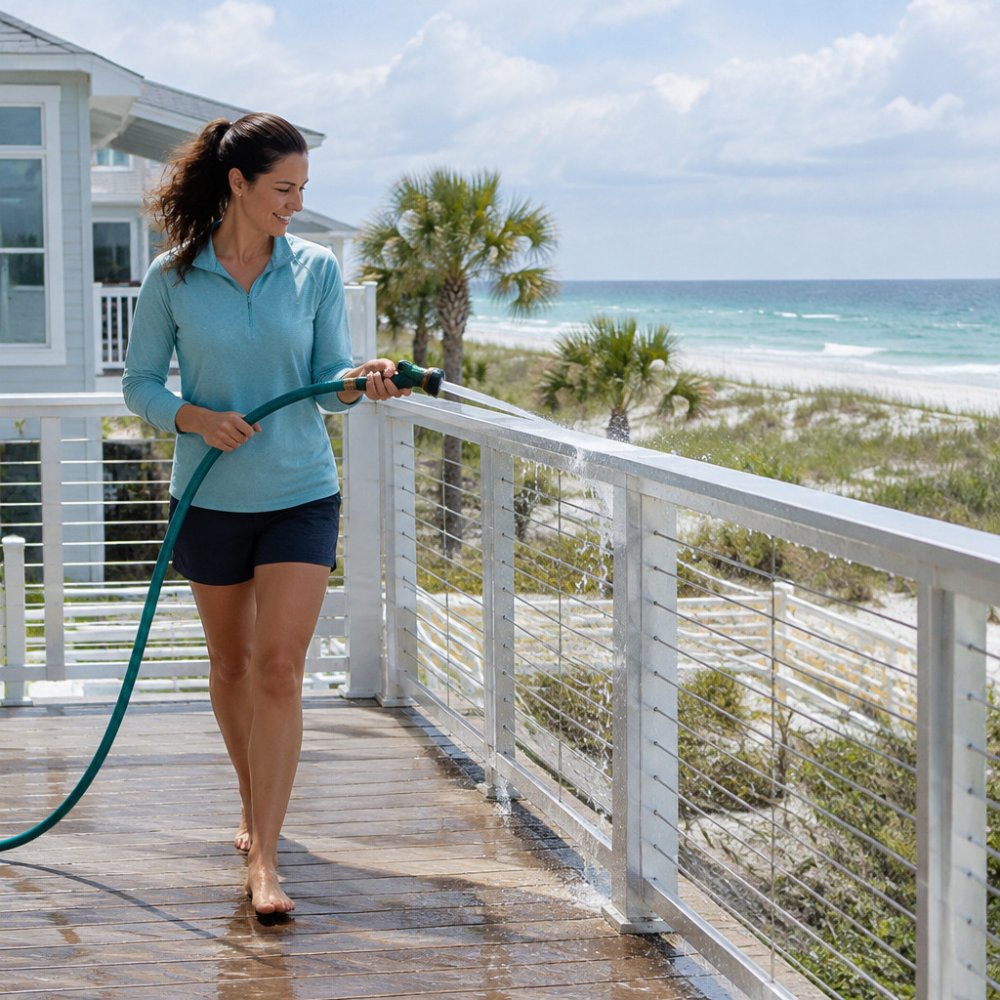
Salt builds up on exposed surfaces, so routine rinsing matters. Rinse exposed surfaces with fresh water regularly, especially after storms, and wipe off salt crust before it dries. Use a mild, non-abrasive cleaner and a soft cloth. Avoid steel wool and harsh abrasives, which can scratch the oxide layer.
Check fasteners and any dissimilar metal contact points during routine inspections. Galvanic corrosion can start where incompatible metals touch in salt water. For general steps on protecting outdoor poles, see our guide to preventing rust on outdoor flagpoles, and for telescoping sections specifically, read how to maintain telescoping flagpoles.
Choosing the Right Finish for Each Part of Your Beach Home
Match the finish to the exposure, not to the whole house. Use anodized aluminum where salt and wear are highest, such as railings, handrails, and exposed trim on the ocean side. Powder coating can work well on sheltered or color-matched pieces. Anywhere you need a finish that is easy to repaint, powder coating is the simpler choice.
For a telescoping flagpole on a coastal property, pick a kit built from marine-suitable components and a finish matched to salt exposure. Our durable flagpole guide for coastal homes walks through the decision in more detail.
Watch out: finishes that look identical in a showroom can perform very differently after several seasons of salt spray. Ask for the coating standard and thickness before you buy.
Frequently Asked Questions
What aluminum is best for salt water?
Anodized aluminum is a common choice near the coast because its thicker oxide layer resists pitting better than bare aluminum. Exposure distance, wind and salt load all change results, so check the finish specification with a supplier before you buy.
How long does anodized aluminum last outside?
The research available does not give a verified lifespan for anodized aluminum at beach homes, so no single number is safe to promise. Service life depends on finish thickness, salt exposure and how often the surface is rinsed. Regular cleaning and prompt attention to damage help the finish last longer in coastal settings.
Does salt air damage anodized aluminum?
Salt air can damage anodized aluminum, especially when deposits sit on the surface for long periods. Anodizing is not immune to failure in coastal conditions. Rinsing with fresh water and checking for surface breakdown reduces the risk of damage over time.
Is anodized aluminum better than powder-coated aluminum for coastal homes?
Anodizing forms its oxide layer from the metal itself rather than adding a separate coating. Powder coating offers more color options and can perform well when properly applied. The best choice depends on finish chemistry, coating standards and the specific coastal exposure.
Quick answer: Anodized aluminum is usually worth the premium on the parts of a beach home that take the most salt and wear. It is not automatically the right choice for every component, so match the finish to the exposure.
