

Which Heavy Duty Telescoping Flagpole Is Best for High Winds?
Last Updated: November 12, 2026
Quick Summary
The best heavy duty telescoping flagpole for most homes is the 25 Ft Heavy Duty Superior 2 kit, which pairs a 3½-inch base with 10-gauge 7000-T8 aluminum. Smaller yards do well with the 20 Ft Superior 1, while waterfront properties should consider the nautical yardarm kits.
- Every Armor kit uses 10-gauge 7000-T8 aluminum, five telescoping sections, and a 15-year pole warranty.
- The 30 Ft Superior 2 kit adds a 30-inch ground sleeve and a 1 lb 4 oz flag weight for gusty conditions.
- A wind rating assumes one stated flag size, a proper ground sleeve, and defined exposure, not gusts.
- Rinse sections with fresh water and lubricate locking mechanisms yearly to keep the pole working.
- Call 811 before digging and confirm soil, drainage, and clearance before installing any ground sleeve.
Table of Contents
- What Separates a Heavy Duty Telescoping Flagpole From the Rest
- Quick Comparison: Armor Heavy Duty Telescoping Flagpole Kits
- Best Overall: 25 Ft Heavy Duty Superior 2 Telescoping Flagpole Kit
- Best for Tall Displays: 30 Ft Heavy Duty Superior 2 Telescoping Flagpole Kit
- Best Value: 20 Ft Superior 1 Telescoping Flagpole Kit
- Best for Waterfront Properties: Nautical Telescoping Flagpole Kits
- How to Read a Heavy Duty Flagpole Wind Rating
- Telescoping Flagpole Maintenance Guide for Long-Term Performance
- Choosing the Right Pole Height and Mounting Setup
- Pick Your Pole and Check It Against Your Property
- Frequently Asked Questions
What Separates a Heavy Duty Telescoping Flagpole From the Rest
A heavy duty telescoping flagpole is a multi-section aluminum mast that extends for display and collapses for access, built with thicker walls and a wider base than a standard residential pole. At Armor Flagpoles, the differences that matter are measurable. Wall thickness, base diameter, section count, alloy grade, and warranty terms decide how a pole handles wind.
Most buyers compare height and price, then stop. That is backwards. Two 20-foot poles can differ in long-term outcome based on their specs.
The Five Specifications That Decide Strength
We judge every pole on five numbers. Here they are, and why each one matters.
- Wall thickness (gauge): Our Superior line uses 10-gauge aluminum.
- Base diameter (butt diameter): The bottom section carries the most stress. A wider base spreads wind load across more material.
- Section count: Our kits use five telescoping sections.
- Alloy and temper: Our kits use 7000-T8 aluminum. Tensile strength alone is not a wind rating, though.
- Warranty: Our kits carry a 15-year pole warranty.
Those five specs drive every recommendation below. For the full breakdown, our specification guide to heavy duty telescoping flagpoles walks through wall thickness, base diameter, and warranty terms line by line.
Quick Comparison: Armor Heavy Duty Telescoping Flagpole Kits
The kits below share a core build of 10-gauge 7000-T8 aluminum and a 15-year pole warranty. The differences come down to height, base diameter, flag size, and included lighting.
| Kit | Height | Base Diameter | Flag Included | Light | Price |
|---|---|---|---|---|---|
| Superior 1 | 20 ft | 2¾ in | 3×5 nylon | 266-LED | $855.00 |
| Superior 2 | 20 ft | 3½ in | 4×6 nylon | 566-LED | $1,150.00 |
| Superior 2 | 25 ft | 3½ in | 4×6 nylon | 566-LED | $1,200.00 |
| Superior 2 | 30 ft | 3½ in | 4×6 nylon | 566-LED | $1,595.00 |
| Nautical Superior 2 | 20 ft | 3½ in | 4×6 nylon | 566-LED | $1,500.00 |
| Nautical Superior 2 | 25 ft | 3½ in | 4×6 nylon | 566-LED | $1,550.00 |
| Nautical Superior 2 | 30 ft | 3½ in | 4×6 nylon | 566-LED | $1,925.00 |
Kits ship free. We select the included flag, light, and flag hardware to match each pole, so you are not hunting for compatible parts.
Armor Heavy Duty Telescoping Flagpole Kit Prices
Best Overall: 25 Ft Heavy Duty Superior 2 Telescoping Flagpole Kit
Our top pick is the 25 Ft Heavy Duty Superior 2 kit at $1,200.00. It hits the sweet spot between display height and manageable footprint for most homes.
The pole uses 10-gauge 7000-T8 aluminum with a 3½-inch base and five telescoping sections. That 3½-inch base is wider than the 2¾-inch base on the Superior 1. A 4×6 U.S. nylon flag is included, along with a 566-LED solar light and a 30-foot charging cord.
Lowering the pole brings the flag attachments within reach, so you can change flags without an external halyard. The ball-bearing swivel system helps the flag rotate and reduces tangling.
Best for: homeowners who want a visible display without going to 30 feet. Skip if: you need three-flag nautical display, which the yardarm kits cover.
Want to see how it stacks up on gauge, base, and warranty? Our comparison of the strongest heavy duty telescoping flagpoles puts the Superior 2 side by side with other builds.
Best for Tall Displays: 30 Ft Heavy Duty Superior 2 Telescoping Flagpole Kit
Height changes the physics. A 30-foot pole at $1,595.00 gives your flag room to stand above rooflines and landscaping, and it is our pick for spacious lawns.
The build matches the 25-foot model: 10-gauge 7000-T8 aluminum, 3½-inch base, five sections, 2-inch top. This kit adds a 30-inch ground sleeve and a 1 lb 4 oz flag weight that attaches to the bottom retainer ring. The weight helps hold flags down in gusty conditions.
That weight is a handling aid, not a wind rating.
Best for: large yards, waterfront lots, and properties where the flag should read from the road. Skip if: your yard is tight or your setbacks are shallow.
Best Value: 20 Ft Superior 1 Telescoping Flagpole Kit
Not everyone needs the widest base. The 20 Ft Superior 1 kit at $855.00 delivers the same 10-gauge 7000-T8 aluminum and five sections in a lighter package.
The trade-off is the 2¾-inch base and a 3×5 flag instead of 4×6. You also get a 266-LED solar light rather than the 566-LED, and no ground collar. For a modest front yard, none of that hurts.
The telescoping design lets you lower the mast to change flags. You lower the mast to change flags instead of fighting a halyard.
Best for: first-time buyers and smaller residential lots. Skip if: you want the widest base and brightest light available.
Best for Waterfront Properties: Nautical Telescoping Flagpole Kits
Nautical kits add a yardarm that supports a three-flag display. Our nautical kits add a 4-foot aluminum yardarm mounted on the second section from the top, with two rope cleats already attached.
Three heights are available: 20 ft at $1,500.00, 25 ft at $1,550.00, and 30 ft at $1,925.00. All three use the 3½-inch base, 10-gauge 7000-T8 aluminum, and six stainless clips for three flags. One 4×6 U.S. flag is included. Yardarm demo flags are not.
The 566-LED solar lighting system on the 25-foot model includes 45-degree angling. Mounting hardware for docks, piers, and seawalls is purchased separately.
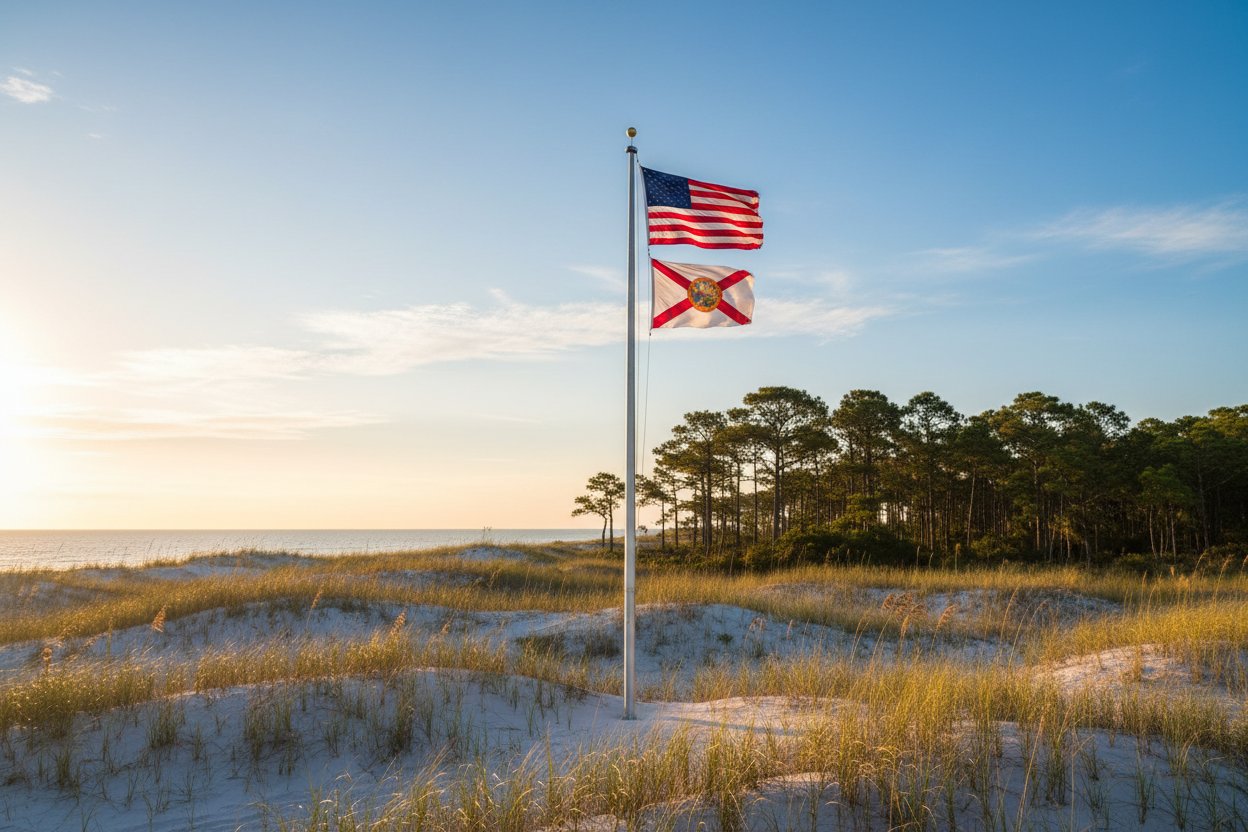
Browse the full nautical telescoping flagpole kit collection to match a height to your dock or shoreline.
How to Read a Heavy Duty Flagpole Wind Rating
A wind rating is a published wind speed a pole is rated for under specific conditions. Those conditions matter as much as the number. Most ratings assume one flag of a stated size, a properly installed ground sleeve, and a defined exposure. Change any of those and the real-world ceiling moves.
That is why we treat a wind rating as a starting point, not a guarantee. Material tensile strength is not a complete flagpole wind rating, and no single number captures every yard.
What a Wind Rating Usually Assumes
Most published ratings rest on a few baseline conditions. Knowing them helps you compare poles fairly.
- One flag, stated size: A rating is typically tied to a single flag at a specific dimension. A larger flag adds sail area and load.
- Proper installation: The rating assumes the pole is set in a correctly sized ground sleeve with proper backfill and drainage.
- Defined exposure: Open, unobstructed ground loads a pole differently than a sheltered suburban lot ringed by trees and structures.
- Sustained wind, not gusts: Ratings usually reference sustained speed. Short gusts load the mast differently than hours of steady wind.
When you compare two poles, check whether their ratings use the same flag size and installation assumptions. A higher number under looser assumptions is not automatically stronger.
How Flag Size and Flag Count Change the Load
Sail area is the biggest variable most buyers overlook. A 4×6 flag presents noticeably more surface than a 3×5, and that extra area catches more wind at the same speed.
Flying two flags roughly doubles the sail area on the mast. Our nautical kits carry three flags on a yardarm, which is a different load profile than a single-flag display. If you plan a multi-flag setup, size the pole and mounting for that load from the start.
Match your flag plan to the pole before you buy.
Exposure, Soil, and Gusts in the Real World
Three site factors move performance more than most spec sheets admit.
- Exposure: A waterfront lot or open field sees steadier, stronger wind than a lot tucked behind a tree line.
- Soil and mounting: Sandy coastal soil and firm clay hold a ground sleeve differently. Loose or sandy soil needs careful backfill and drainage.
- Gusts versus sustained wind: A brief gust loads the mast differently than a long blow.
A pole rated for a wind speed still depends on a solid install.
A Practical Way to Compare Two Poles
Use the same criteria for every pole you consider, rather than trusting the headline number.
- Confirm the flag size and count the rating assumes.
- Check the installation method and sleeve size behind the rating.
- Compare the five specifications: wall thickness, base diameter, section count, alloy and temper, and warranty.
- Ask how the pole behaves in gusts and how sections lock under load.
- Confirm which parts are replaceable if a locking component wears.
That apples-to-apples approach tells you more than any single wind figure. Our telescoping flagpole wind rating guide walks through how to interpret ratings and what they leave out.
Telescoping Flagpole Maintenance Guide for Long-Term Performance
A telescoping flagpole maintenance guide comes down to four habits. Do them yearly and the pole outlasts most displays on the street.
- Rinse the sections: Fresh water removes salt and grit that bind telescoping tubes.
- Lubricate the locking mechanism: A light silicone spray keeps spring-loaded buttons moving freely.
- Inspect clips and rings: Replace worn stainless clips before a grommet tears loose.
Rinsing sections helps remove salt and grit that can bind telescoping tubes.
Our kits carry a 15-year pole warranty and a 1-year warranty on parts and accessories.
Choosing the Right Pole Height and Mounting Setup
Height and mounting decide more than any spec sheet. Match the pole to your property before you match it to a budget. A pole that is right for one lot can be wrong for the next based on soil, clearance, and how you plan to mount it.
Match Pole Height to Your Property
Start with how far the flag needs to read. A taller pole lifts the flag above rooflines and landscaping, but it also raises the load on the base and mounting.
- Smaller yards and modest setbacks: The 20 Ft Superior 1 kit suits tighter lots.
- Most homes: The 25 Ft Heavy Duty Superior 2 kit balances display height and footprint.
- Spacious lawns and waterfront lots: The 30 Ft Heavy Duty Superior 2 kit gives the flag room above the surroundings.
Check local setback and height rules before you dig. Check any local height or setback rules before you dig.
Ground Sleeve Installation: Soil, Concrete, and Utilities
The kits include a ground sleeve sized to the pole. The 20-foot Superior 2 and nautical kits list a 24-inch sleeve, and the 30-foot kits list a 30-inch sleeve.
Before you dig, work through the site checks.
- Call 811 before digging: Confirm there are no buried utilities where the sleeve goes.
- Check soil type: Firm clay and sandy coastal soil hold a sleeve differently. Loose or sandy soil needs careful backfill and drainage.
- Plan drainage: The sleeve should let water escape so the pole does not sit in standing water.
- Confirm clearance: Give the flag room to swing without striking roofs, wires, or branches.
Hitch-Mount Setup for RVs and Campers
For RVs and campers, check hitch-mount compatibility against the pole's base diameter. The 16 Ft Classic measures 2.4 inches at the base, and the 20 Ft Superior 1 measures 2.75 inches.
A suitable hitch mount should have an adjustment screw, a bottom stop bolt, and an open bottom for drainage.
Lower campers typically use the 16-foot pole. Taller RVs and fifth wheels need the 20-foot Superior 1 for flag clearance. Always check actual roof clearance before you mount anything. We do not recommend ladder racks or ladder-mounted clamps. We have seen them tear up campers.
Mounting Hardware Is Purchased Separately
Ground sleeves ship with the ground-install kits. Hitch mounts, dock mounts, and other setup-specific hardware are purchased separately unless expressly listed as included. Confirm your mounting plan before you order so the kit arrives ready for your site.
If you are unsure which height and mount fit your property, start with our heavy duty telescoping flagpole lineup and match a height to your lot.
Pick Your Pole and Check It Against Your Property
Here is the short version. Most homeowners are best served by the 25 Ft Heavy Duty Superior 2 kit. Smaller yards do fine with the 20 Ft Superior 1. Waterfront properties should look at the nautical kits with the yardarm.
Before you order, measure your setbacks, check your soil, and confirm your mounting plan. Those three checks prevent most regrets.
Armor Flagpoles kits feature 10-gauge 7000-T8 aluminum and a 15-year pole warranty. We select the flag, light, and hardware to match each pole. Made in the USA is listed on the telescoping kits, and free shipping is listed on the kits.
Start with our heavy duty telescoping flagpole lineup and match a height to your property.
Frequently Asked Questions
Which flagpole will withstand the strongest wind?
Wind resistance comes from the whole build, not one number. Look at gauge, base diameter, section count, and hardware together. A 10-gauge 7000-T8 aluminum pole with a 3½-inch base gives you more material at the point where bending starts. Armor Flagpoles publishes those specs on every listing so you can compare kits directly. Always check the actual roof or ground clearance at your site before you buy.
What makes a flagpole considered heavy duty?
Heavy duty usually means thicker walls, a wider base, and more telescoping sections. Armor Flagpoles uses 10-gauge 7000-T8 aluminum across its Superior line, with base diameters of 2¾ inches on the 20 Ft Superior 1 and 3½ inches on the Superior 2 models. Stainless-steel clips and a ball-bearing swivel system also matter.
Are telescoping flagpoles durable enough for high winds?
A telescoping pole should be installed correctly for the site. The telescoping design also lets you lower the mast before a severe storm arrives, which reduces load on the pole. Pair the pole with the flag size its kit includes, and add the flag weight where the kit supplies one.
Do heavy duty telescoping flagpoles require professional installation?
Most residential ground installations are a homeowner project. The kit includes a ground sleeve and flash collar, and the pole slides into the sleeve. You still need to dig to the right depth and confirm soil and drainage at your site. Coastal sand and rocky ground behave differently, so check local conditions first. For dock, pier, or RV mounting, confirm the hardware and clearance before you start.
What is the advantage of 7000 T8 aluminum in flagpoles?
7000 T8 is an aluminum alloy and temper designation. Armor Flagpoles uses it in 10-gauge thickness across the Superior 2 line, which gives the pole more material to carry wind force. Material strength alone is not a complete wind rating, so compare the full build.
