

7 Steps to Choose the Right Flagpole Rope for Wind Resistance
Last Updated: October 25, 2026
Quick Summary
Choosing the right flagpole rope wind resistance depends on matching rope material, diameter, and length to your pole height, flag size, and local wind exposure. Polyester and wire-core ropes resist stretch and weather better than nylon in high-wind areas, while proper diameter and length prevent tangling and premature wear.
- Most residential flagpoles use rope between 1/4 inch and 3/8 inch in diameter based on pole height and flag size.
- Polyester resists UV and weather better than nylon; wire-core rope limits stretch in sustained wind on tall poles.
- External halyards need low-stretch rope like polyester; internal halyards must match rope diameter to pulley and base opening.
- Quality rope typically lasts 3 to 5 years with normal use; high-wind areas and intense sun shorten this timeline.
- Monthly inspection for fraying, discoloration, and soft spots catches wear early before rope fails.
Table of Contents
- Why Flagpole Rope Selection Matters in High-Wind Areas
- Understanding Flagpole Halyard Rope Material Options
- Selecting the Correct Flagpole Rope Diameter for Your Needs
- Determining Flagpole Rope Length for Proper Operation
- Matching Rope to Your Flagpole Height and Wind Conditions
- Flagpole Rope Wear and Maintenance Best Practices
- Getting Started With Your Flagpole Rope Setup
- Frequently Asked Questions
Why Flagpole Rope Selection Matters in High-Wind Areas
Choosing the right rope with proper flagpole rope wind resistance is one of the most overlooked decisions homeowners make.
At Armor Flagpoles, we've watched countless customers struggle with rope problems that could have been prevented.
This guide walks you through material types, diameter sizing, length calculations, and maintenance practices that keep your rope performing year after year.
Understanding Flagpole Halyard Rope Material Options
The halyard rope you choose determines how well your flag system handles wind and weather. Three material families dominate the market: nylon, polyester, and wire-core rope. Each behaves differently under sustained wind, UV exposure, and pulley friction.
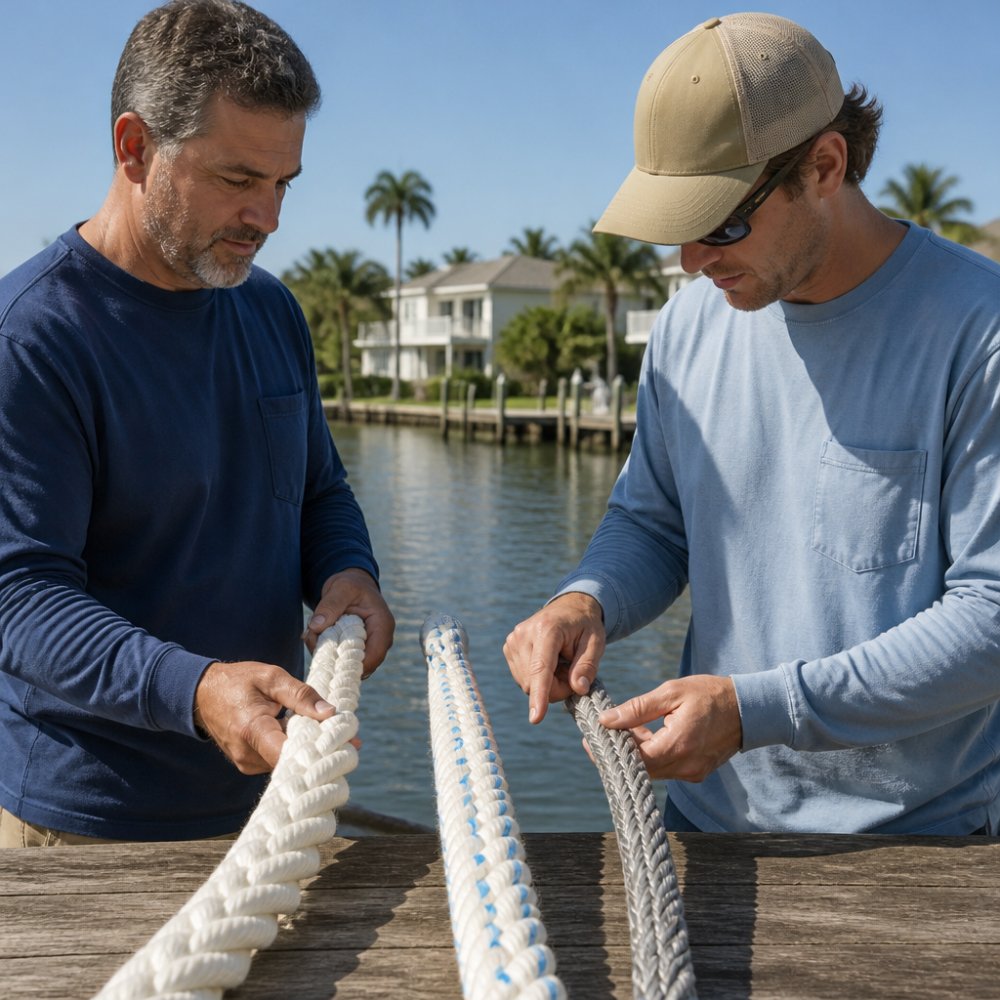
How the Three Materials Compare Under Wind and Sun
| Property | Nylon (all-fiber) | Polyester (all-fiber) | Wire-core |
|---|---|---|---|
| Stretch under load | Moderate to high | Low | Very low |
| UV resistance | Moderate | Good | Good (jacket dependent) |
| Water absorption | Absorbs some moisture | Low | Low |
| Abrasion resistance | Good | Good | Good jacket, stiff core |
| Hand feel | Soft, easy to knot | Firmer, harder to knot | Stiff, least forgiving |
| Typical service life in moderate wind | Several years | Several years, longer in high UV | Longest in sustained wind |
| Best fit | Moderate wind, frequent use | High UV, wet coastal air | Tall poles, constant wind |
Treat these as relative tendencies, not guarantees. Actual life depends on flag size, pole height, pulley condition, and how often the flag is left up in strong wind.
Nylon Rope: Strength and Shock Absorption
Nylon is the most common choice for residential flagpoles. It combines strength with natural flexibility, so it absorbs sudden gusts instead of snapping.
Double-braid nylon has a braided core inside a braided jacket. The smooth outer surface reduces friction as the rope runs through the pulley, which makes raising and lowering easier by hand.
Two drawbacks matter in wind. Nylon stretches under sustained load, so the halyard can go slack and slap the pole. It also absorbs some moisture, which can stiffen the rope over time in wet climates.
Polyester Rope: UV and Weather Protection
Polyester resists ultraviolet light and weather exposure better than nylon. If your flagpole sits in direct sun all day or you live where UV radiation is intense, polyester is worth the upgrade.
Polyester has lower stretch than nylon, which means less movement in the pulley system and less rope slap in steady wind. The trade-off is stiffness. Polyester feels firmer in your hands and is harder to knot.
Wire-Core vs. All-Fiber Rope
Wire-core rope has a steel wire center surrounded by a nylon or polyester jacket. The wire core limits stretch under wind load, keeping the halyard taut and reducing vibration and tangling.
All-fiber rope is lighter and easier to handle. It suits most residential setups. The choice depends on pole height and wind exposure. Taller poles in extreme wind benefit from wire-core. Standard residential setups work fine with quality all-fiber rope.
Matching Material to Your Wind Exposure
A simple rule helps. In moderate suburban wind, nylon is affordable and easy to handle. In high UV or wet coastal air, polyester lasts longer. In sustained wind on a tall pole, wire-core keeps the halyard taut. No rope material compensates for a flag that is too large for the pole or a pole that is not rated for the site. Check those first.
Selecting the Correct Flagpole Rope Diameter for Your Needs
Rope diameter directly affects strength and durability. Thicker rope handles more wind stress, but it's heavier and harder to manage by hand.
Most residential flagpoles use rope between 1/4 inch and 3/8 inch in diameter. A 15-foot pole with a standard 3x5-foot flag typically needs 1/4-inch rope. A 20-foot pole with a 4x6-foot flag needs 5/16-inch or 3/8-inch rope. The larger the flag and the taller the pole, the more rope diameter you need.
Check your flagpole's pulley opening. The rope must fit smoothly through the pulley without binding. If the rope is too thick, it won't move freely.
When in doubt, choose the thicker option. A slightly thicker rope lasts longer and handles unexpected wind better.
Determining Flagpole Rope Length for Proper Operation
Rope length must be precise. Too short, and you can't raise the flag fully. Too long, and excess rope tangles at the bottom.
For a 15-foot flagpole, you typically need 30 to 35 feet of rope. For a 20-foot pole, expect 40 to 50 feet.
Many retailers sell rope in standard lengths. If your pole requires 42 feet and the rope comes in 50-foot spools, buy the longer length.
Matching Rope to Your Flagpole Height and Wind Conditions
Your local wind environment is the single biggest factor in rope selection. Coastal areas, open plains, and high elevations all experience different wind patterns. A rope that works in a sheltered suburban yard can fail on a windswept beach. This section gives you a decision path that separates external halyards, internal halyards, and site exposure.
20 Ft Superior 1 Telescoping Flagpole Kit →
Start With Your Halyard Configuration
External halyards run on the outside of the pole. The rope is exposed to sun, rain, and abrasion against the pole surface. Rope slap is common in wind.
Internal halyards run inside the pole and exit through a pulley and a base opening. The rope is shielded from UV, but it rubs on the pulley and the base exit.
Match Rope to Site Exposure
Use three exposure tiers as a starting point.
- Sheltered: fenced yards, tree lines, and low-rise neighborhoods. Quality nylon is usually sufficient.
- Moderate: open suburban lots, inland plains, and regular afternoon wind. Polyester is a sensible upgrade.
- Severe: coastline, ridge lines, open farmland, and sites with frequent sustained wind. Polyester or wire-core, plus a smaller flag and a pole rated for the site.
These tiers are guidance, not ratings. Your actual wind exposure depends on obstructions, terrain, and height above ground.
Use Pole Height and Flag Size as a Check
Rope choice cannot compensate for an oversized flag. A flag that is too large for the pole increases load on the halyard, pulley, and truck. If your flag snaps in moderate wind, the first fix is often a smaller flag, not a stronger rope. Confirm the flag size recommended for your pole before you upgrade rope.
RV and Camper Mounting Notes
For RV mounting, check hitch-mount compatibility with the pole's base diameter. The 16 Ft Classic has a 2.4-inch base diameter. The 20 Ft Superior 1 has a 2.75-inch base diameter. Lower campers typically use the 16-foot pole.
Look for an adjustment screw, a bottom stop bolt, and an open bottom for drainage on the mount. These features let you set the pole height, lock it in place, and let water escape.
When Rope Choice Cannot Fix the Problem
Rope is one part of a system. If your pole is not rated for the site, if the flag is too large, or if the pulley and cleat are worn, a premium rope will not solve the problem. In those cases, lower the flag in high wind or remove it. That protects the rope, the pole, and the hardware.
Flagpole Rope Wear and Maintenance Best Practices
Good maintenance extends rope life by years. Regular inspection catches problems before they become failures. A few simple habits keep your halyard in top condition.
Inspecting for Damage and Wear
Check your rope monthly, especially after high winds. Look for fraying, discoloration, or soft spots. Run your hand along the rope to feel for damage.
Discoloration often signals UV damage or water absorption. Fraying at the ends is normal if it's minor, but widespread fraying means the rope is degrading. Soft spots indicate internal damage. These ropes need replacement soon.
Reducing Rope Slap and Tangling in Wind
Rope slap, the sound of rope hitting the pole, causes wear and tangling. To reduce slap, keep the rope taut. Adjust your cleat position or use a rope guide to keep the halyard away from the pole.
In high winds, tangling happens when excess rope coils at the base. Keep coils neat and secure with a rubber band or light rope tie. Never leave loose coils that can tangle in wind.
When to Replace Your Flagpole Rope
Most quality rope lasts 3 to 5 years with normal use. High-wind areas and intense sun exposure shorten this timeline. If your rope shows significant wear, fraying, or soft spots, replace it now. A broken rope mid-storm is frustrating and potentially unsafe.
Replacement is straightforward. Don't wait until the rope fails to order a replacement.
Getting Started With Your Flagpole Rope Setup
Selecting rope with strong flagpole rope wind resistance starts with knowing your environment and your pole specifications. Match the material to your climate. Choose diameter based on pole height and flag size. Calculate length carefully.
Quality rope is an investment in your flag display. It keeps your flag flying proudly through wind and weather. When you're ready to upgrade or replace your rope, verify your pole's specifications and wind conditions.
For help selecting the right rope and hardware for your specific flagpole, explore how wind load affects flagpole height requirements to understand your system's full wind capacity. If you're experiencing rope tangling or wear, learn how to prevent flagpole vibration in high winds for solutions that protect your rope and pole. And if you're considering a new flagpole installation in a high-wind area, review what to look for in a flagpole for high wind areas to build a system that handles your climate.
Frequently Asked Questions
Which flagpole rope material holds up best in windy conditions?
Nylon offers strength and shock absorption in high winds, while polyester excels in sustained wind with better UV resistance. Double-braid nylon combines a braided core with durability and flexibility, making it a top choice for most residential flagpoles. Polyester is recommended for areas with high UV exposure or frequent wind. The best choice depends on your specific wind patterns and sun exposure. Check your pole's specifications and local weather conditions before deciding.
What diameter rope should I use for a flagpole?
Rope diameter depends on your flagpole height and flag size. Residential poles typically use 5/16-inch or 3/8-inch diameter rope. Taller poles and larger flags require thicker rope for adequate strength. Always verify the manufacturer's recommendation for your specific pole model. Using undersized rope risks breaking during wind gusts, while oversized rope can strain pulleys and cleats.
How often should flagpole rope be inspected or replaced?
Inspect your rope quarterly, especially before and after high-wind seasons. Look for fraying, discoloration, stiffness, or visible damage. Replace rope when you notice reduced flexibility, surface deterioration, or any signs of breaking strands. In coastal or high-wind areas, expect replacement every 2-4 years depending on exposure and maintenance. Regular inspection extends rope life and prevents unexpected failure.
How can I reduce wear on flagpole rope in strong winds?
Reduce rope slap by using a flag that fits your pole's design and maintaining proper tension. Fly a slightly smaller flag if wind gusts cause excessive movement. Keep cleats and pulleys clean and properly lubricated to minimize friction. Secure the rope's free end with a carabiner or clip to prevent tangling. In extreme wind, consider lowering your flag temporarily to avoid unnecessary stress on the rope and hardware.
