

What to Look for in a Flagpole for High Wind Areas
Table of Contents
- Why Cheap Flagpoles Fail in High Wind
- Butt Diameter and Wall Thickness: The Two Specs That Decide Survival
- 7000 T8 Aluminum: The Strength Behind a Telescoping Flagpole Wind Rating
- Best Residential Flagpoles for Wind: What Separates Them From the Rest
- Five Telescoping Sections and a 15-Year All-Weather Warranty
- Flagpole Maintenance for Coastal Homes: Salt, Storms, and Inspection
- Conclusion
- Frequently Asked Questions
Last Updated: September 30, 2026
Why Cheap Flagpoles Fail in High Wind
A flagpole for high wind areas lives or dies by two numbers: base diameter and wall thickness. Most budget poles skimp on both, and that is why they bend, snap, or seize up after a few storm seasons. This guide from Armor Flagpoles breaks down exactly what to check before you buy.
Cheap poles fail in three predictable ways:
- Thin walls crimp and fold at the joints
- Small bases lean and loosen in saturated soil
- Bare hardware rusts solid, so sections will not telescope
A pole rated for calm suburbs is not the same product as one built for gust resistance. The difference shows up in the specs, not the marketing.
Butt Diameter and Wall Thickness: The Two Specs That Decide Survival
Butt diameter and wall thickness together set a pole's structural integrity. A wider base spreads wind load across more surface area, while thicker walls resist bending stress at each joint.
Why a 3.5-Inch Base Diameter Matters
A 3.5-inch base diameter gives a residential pole the stiffness to stay upright in sustained gusts. Skinny poles under 3 inches flex more, and flexing is what fatigues metal over time.
10-Gauge Aluminum vs. Standard Flagpole Gauges
10-gauge aluminum is thicker than the standard gauges found on most retail poles. That extra material raises tensile strength and adds years to fatigue life. Thinner walls save money for the seller and cost you a replacement pole.
Spec |
Thin Retail Pole |
Heavy-Duty Pole |
|---|---|---|
Base diameter |
Under 3 in |
3.5 in |
Wall gauge |
16-20 gauge |
10 gauge |
Alloy |
Mixed scrap |
|
Warranty |
1-3 years |
15 years |
7000 T8 Aluminum: The Strength Behind a Telescoping Flagpole Wind Rating
7000 T8 aluminum is the alloy that makes a real telescoping flagpole wind rating possible. It is stronger than the 6000-series aluminum used in most consumer poles, so it holds its shape under dynamic wind pressure. But the alloy is only half the story, the other half is how the pole is engineered to shed the load that wind puts on it.

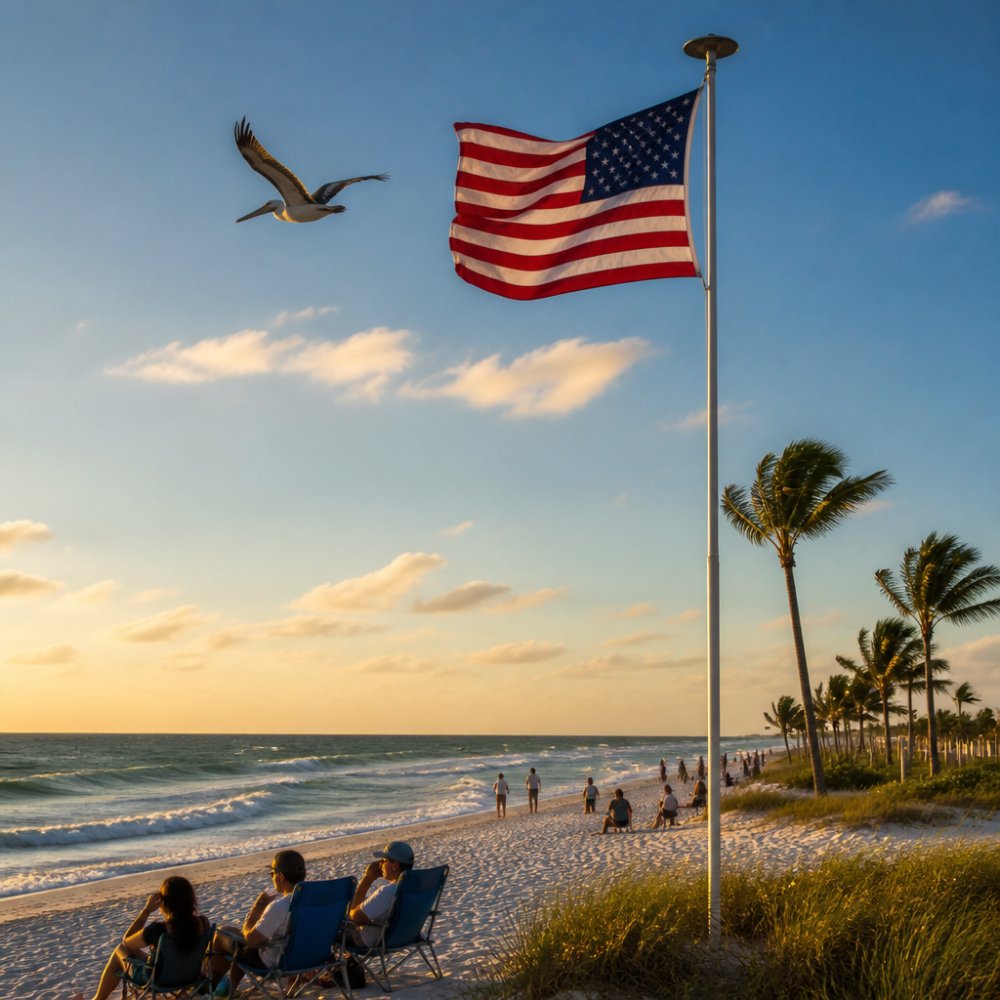
How Wind Load Actually Works on a Flagpole
Wind load is a function of three things: wind speed, the surface area catching the wind (the flag plus the pole itself), and the height at which that surface sits. A flag acts like a sail, and the pole has to resist the bending moment that sail creates at its base. That is why a taller pole with the same base diameter is always weaker than a shorter one, the lever arm is longer.
A simplified rule of thumb many engineers use: wind pressure rises with the square of wind speed. Double the wind speed and you roughly quadruple the force on the flag and pole. That is why a pole that shrugs off a 30 mph breeze can fail in a 60 mph gust even though the number only doubled.
To sanity-check your own site, look up the design wind speed for your ZIP code in the wind maps published in the International Building Code and ASCE 7. Coastal zones carry the highest design speeds, which is exactly why salt-air poles need both a stronger alloy and a wider base.
Why 7000 T8 Beats 6000-Series Under Load
Here is why the alloy matters:
- Higher tensile strength means less bending at full extension
- Better corrosion resistance for salt air
- Five telescoping sections spread load instead of concentrating it at one joint
- 10-gauge walls resist the crimping that folds thinner poles at the ferrules
Armor Flagpoles offers heavy-duty telescoping poles with 7000 T8 aluminum at 10-gauge thickness, a 3.5-inch base, and five telescoping sections. We only offer the flagpoles that meet these specs, because those are the ones that hold up.
Matching Flag Size to Pole Rating
Oversizing the flag is the most common way people accidentally overload a pole that was fine on paper. A flag that is too large for the pole height multiplies the sail area and pushes the bending moment past what the base was designed to handle. As a general rule, keep the flag sized to the pole's published recommendation and drop one size in coastal or exposed sites where sustained gusts are routine.
Best Residential Flagpoles for Wind: What Separates Them From the Rest
The best residential flagpoles for wind share four traits: a 3.5-inch base, 10-gauge walls, 7000 T8 aluminum, and a five-section telescoping design. Skip any one of these and you are gambling with your money.
30 Ft Heavy Duty Superior 2 Telescoping →
What most guides miss is the hardware. A strong mast with weak fittings still fails.
- Truck assembly: must swivel freely without binding
- Cleat: needs to hold halyard tension in gusts
- Snap hooks: stainless steel only, never painted steel
- Halyard system: internal lines resist UV better than exposed rope
The telescoping flagpole wind rating you see advertised means little without matching hardware.
Five Telescoping Sections and a 15-Year All-Weather Warranty
Five telescoping sections let you lower the pole fast when a storm is coming. That single feature protects the whole investment.
A 15-year all-weather factory warranty backs the pole itself, so the maker stands behind the alloy and the build. Few retail poles carry anything close.
Flagpole Maintenance for Coastal Homes: Salt, Storms, and Inspection
Flagpole maintenance for coastal homes comes down to three habits: rinse, inspect, and check the base. Salt spray attacks metal, and wind finds every weak point. But two things most guides skip matter just as much: what kind of soil your ground sleeve sits in, and how to read the pole for fatigue before it fails.
Soil Composition Changes Your Foundation Requirements
The ground sleeve is only as stable as the soil around it. Sandy coastal soil drains fast but shifts easily, so a sleeve set in pure sand can migrate and let the pole lean. Clay holds water and swells, which can heave a sleeve out of plumb over a season. Rocky or compacted soil grips well but makes digging the sleeve a different job entirely.
A common pattern in coastal yards is a sandy top layer over a firmer sublayer. The fix is to set the sleeve deep enough to reach the firmer layer, then backfill and tamp in lifts rather than dumping all the concrete or gravel at once.
Post-Storm Inspection: A Step-by-Step Protocol
Run this check after any major storm:
- Rinse the pole and hardware with fresh water to clear salt and grit
- Look for white powder or pitting on the aluminum
- Test each section for smooth telescoping
- Check the ground sleeve for shifting, tilting, or pooling water
- Inspect snap hooks and the truck for rust
- Confirm the cleat still holds tension
- Sight up the pole from two angles to check for a new lean
- Flex each joint gently by hand and listen for creaks or grinding
Visual Indicators of Fatigue Before Failure
Metal rarely fails without warning. The signs show up early if you know where to look:
- Hairline cracks near joints or ferrules, the highest-stress points on any telescoping pole
- A slight, permanent lean, usually the ground sleeve, not the pole, but it loads the pole unevenly
- Sections that stick or grind, often a sign the wall has deformed slightly
- Chalky white oxidation, cosmetic at first, but it signals the protective surface is breaking down
- Discolored or pitted spots, localized corrosion that becomes a crack starter under load
Conclusion
Choosing a flagpole for high wind areas is really a math problem: base diameter, wall gauge, alloy, and section count. Get those right and the pole survives. Get them wrong and you will be shopping again in three years.
Frequently Asked Questions
Which flagpole will withstand the strongest wind?
The pole that wins is the one with the thickest wall and widest base, not the tallest. A 10-gauge 7000 T8 aluminum pole with a 3.5-inch base diameter handles far more wind load than a thinner 16-gauge pole of the same height. Telescoping designs with five sections spread stress across more material, and the 15-year all-weather factory warranty on Armor Flagpoles backs that construction.
How does 7000 T8 aluminum compare to standard flagpole materials?
Most budget flagpoles use 6000-series aluminum in thin walls. 7000 T8 aluminum has higher tensile strength, so it resists bending and fatigue under repeated gusts. Combined with 10-gauge thickness, it holds its shape in conditions that dent or kink lighter poles. That difference is why a 7000 T8 pole keeps a telescoping flagpole wind rating high year after year.
Why is a 3.5-inch base diameter important for wind resistance?
The base takes the full bending moment of the pole. A 3.5-inch base spreads that load over more material and gives the ground sleeve more surface to grip, which reduces wobble at the bottom where failures start. Narrower bases flex more and loosen in the soil over time, especially in coastal yards with sandy or loose ground.
What does a factory all-weather warranty cover for flagpoles?
Armor Flagpoles offers a 15-year all-weather factory warranty on the pole itself, plus a 1-year warranty on parts and accessories. It covers the structural pole against weather-related failure, which matters most in high wind and salt-spray zones. Keep your purchase record and inspect the pole after major storms so any issue is documented early.