

How to Clean Salt Spray Off Outdoor Flagpoles
Last Updated: November 12, 2026
Quick Summary
Rinse the flagpole with fresh water from a garden hose every two to four weeks to remove salt spray before it crusts. Wash monthly with mild dish soap and a soft cloth, working top to bottom, then rinse and dry the pole completely.
- Skip high-pressure washing, since it can damage the pole's surface finish.
- Mix one part white vinegar with three parts fresh water for dried salt and water spots.
- Rinse within a day or two after a storm or offshore wind event.
- Hand-wash halyards in fresh water with mild detergent, then air dry fully.
- Never use steel wool, scouring pads, or abrasive powders on any flagpole finish.
Table of Contents
- Why Salt Spray Demands a Different Cleaning Routine
- Supplies You Need Before You Start
- How to Clean an Aluminum Flagpole Step by Step
- Choosing an Aluminum Cleaner That Won't Harm the Finish
- How to Clean Salt Spray Off Outdoor Flagpoles With Vinegar
- How Often to Rinse a Flagpole Near the Coast
- Cleaning Hardware, Halyards, and Flags Safely at Height
- Pick the Right Pole for a Salt-Air Property
- Frequently Asked Questions
Why Salt Spray Demands a Different Cleaning Routine
Salt spray is a film of salt crystals and moisture that settles on any outdoor flagpole near the coast. Left alone, it pulls moisture against the metal and wears down the finish. At Armor Flagpoles, we see what that does to poles over time. A plain rinse keeps a coastal pole alive far longer than an occasional scrub.
Salt is not dirt. It is a chemical load that keeps working between cleanings.
Wind carries salt mist onto the pole shaft, the flag clips, and the halyard. Each dry cycle leaves a thin crust behind. Those layers stack up fast in a coastal environment.
What Salt Deposits Do to Aluminum and Hardware
Aluminum flagpoles resist rust well, but salt still attacks the surface finish. Dried salt draws moisture from the air and holds it against the metal. That trapped damp film is where corrosion starts.
Hardware suffers first. Flag clips, pulleys, and swivel rings sit in the spray zone all day. Salt builds inside the small gaps where water hides. Stainless parts hold up better, but they still collect crust.
A flagpole maintenance guide from Piggotts notes that halyards exposed to salt spray need fresh water rinsing. That stops salt crystals from building up in the rope.
Supplies You Need Before You Start
Salt spray cleaning is mostly about what you do not use. Abrasives and harsh chemicals open the finish, and salt finds every scratch. Gather these items first so the job stays gentle and fast.
- A garden hose with a low-pressure nozzle
- Mild dish soap or a mild detergent
- Two buckets, one for soapy water and one for fresh rinse water
- A soft microfiber cloth and a spare dry cloth
- A soft brush or sponge for crusted spots
- A step ladder rated for your working height
- Safety glasses if you spray overhead
- Fresh water for a final rinse, especially if your hose water is hard
Skip high-pressure washing. A care guide from Zeus Flagpoles warns that high-pressure water can damage the pole's surface finish. Low pressure from a garden hose lifts salt without driving it into seams.
Match the Tool to the Finish
Painted and anodized surfaces scratch easily, so cloth and sponge are safer than any brush with stiff bristles. Stainless-steel hardware tolerates a soft brush in the small gaps around clips and pulleys. Coated surfaces need the lightest touch of all.
Watch out: never use steel wool, scouring pads, or abrasive powders on any flagpole finish. Those scratches become salt traps that speed up corrosion.
Skip These Products Entirely
Bleach, ammonia, and abrasive cleaners can dull or pit aluminum finishes. Acidic cleaners like vinegar are useful in dilution but must be rinsed quickly. Test any new product on a small hidden area and check it a day later before full use.
How to Clean an Aluminum Flagpole Step by Step
The full wash takes about 30 minutes for most poles. Work from the top down, and let gravity carry the dirty water away from clean sections. Here is the sequence we recommend.
Rinse First, Then Wash From Top to Bottom
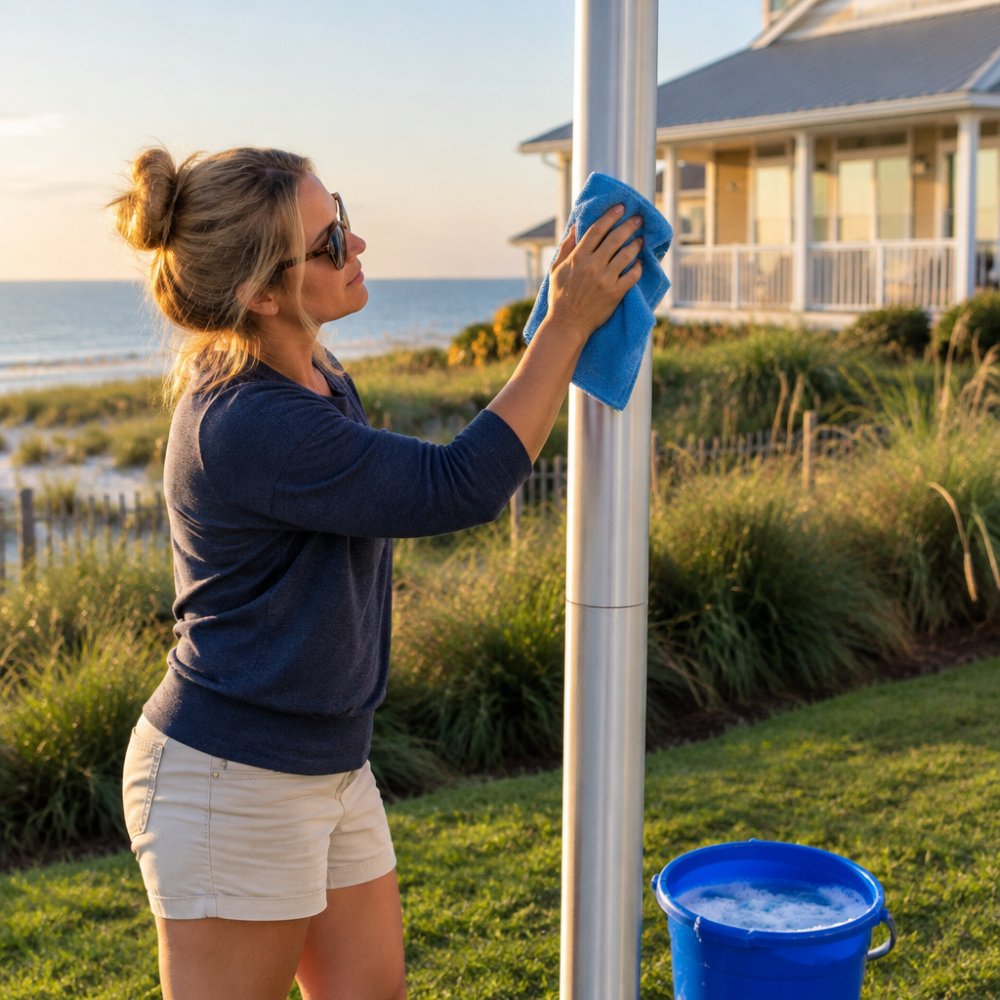
Start with a plain fresh water rinse. This loosens loose dirt and softens the salt crust before you touch the pole. A cleaning guide from Flagpole Warehouse recommends washing from top to bottom with mild dish soap, a soft cloth, and water.
Mix a few drops of mild dish soap into warm water. Climb to the top of the pole and work downward in sections. Wipe the flagpole shaft with your soft cloth, then rinse each section before moving lower.
For stubborn stains, switch to a soft brush or sponge. Use light pressure. Never scrub with an abrasive pad, because scratches open the finish to more salt damage.
Rinse, Wipe, and Dry the Pole
Soap residue attracts dust and holds moisture. Rinse the whole pole again with fresh water until no suds remain. Then wipe it dry with a clean microfiber cloth.
Drying matters more than most people think. Water spots left on a coastal pole become new salt deposits once they evaporate. A quick dry pass takes two minutes and protects the finish.
Lower the pole before you clean if your model telescopes. Working at ground level is safer and faster than reaching overhead.
Choosing an Aluminum Cleaner That Won't Harm the Finish
Mild dish soap and water handle routine cleaning on almost every aluminum flagpole. Stronger cleaners are only for heavy buildup, and only when you match the product to the finish.
Before you scrub, it helps to know what protects your pole. Anodized aluminum vs coastal finishes for beach homes explains how each finish handles salt air and what keeps it intact.
- Mild dish soap: the default choice for routine cleaning
- Diluted vinegar: good for water spots and light mineral film
- Specialty aluminum cleaner: use only if the label says it is finish-safe
- Avoid: bleach, ammonia, and abrasive powders
Test any new cleaner on a small hidden area first. Wait a day and check for dulling before you use it on the full pole.
How to Clean Salt Spray Off Outdoor Flagpoles With Vinegar
Vinegar is the go-to fix for dried salt and water spots. Mix one part white vinegar with three parts fresh water in a bucket. Wipe the pole with a soft cloth dipped in the mix, then rinse well with fresh water.
Do not let vinegar sit on the pole. Rinse within a few minutes, because acid left in place can dull the finish over time. Never mix vinegar with bleach.
Vinegar works best on light, fresh deposits. Heavy crust that has baked on for months needs a longer soap soak first, then a gentle pass with a soft brush.
How Often to Rinse a Flagpole Near the Coast
Rinse a coastal flagpole with fresh water every two to four weeks. Wash with mild soap monthly during heavy salt season. After a storm or offshore wind event, rinse within a day or two.
Salt exposure drives the schedule, not the calendar. A pole on open waterfront takes far more spray than one behind a windbreak. Check the pole after windy weeks and rinse when you feel grit.
Planning a full routine? How to maintain telescoping flagpoles covers the broader maintenance calendar, including hardware checks and seasonal tasks.
Salt exposure, not the calendar, sets the rinse schedule for a coastal pole.
| Timing | What to Do | Note |
|---|---|---|
| Every two to four weeks | Rinse with fresh water | Routine coastal rinse |
| Monthly during heavy salt season | Wash with mild soap | Full soap wash |
| After a storm or offshore wind event | Rinse within a day or two | Salt exposure drives the schedule |
| After windy weeks | Check for grit and rinse | Open waterfront takes more spray |
Cleaning Hardware, Halyards, and Flags Safely at Height
The pole shaft is only part of the job. Flag clips, the pulley, the swivel, and the halyard all sit in the spray zone. Salt collects in the small gaps where water hides, and that is where wear starts.
Rinse and Inspect the Fittings
Wipe clips, pulleys, and swivels with the same mild soap mix and a soft cloth. Rinse with fresh water and dry them. Then look for white crust, stiff movement, or rough edges. A clip that sticks or a pulley that grinds needs attention before the next flag raise.
Stainless parts hold up better than plated ones, but they still collect salt crust. A soft brush works around tight fittings without scratching the finish.
Hand-Wash the Halyard
Ropes need special care. Hand-wash halyards in fresh water with a little mild detergent, then air dry them fully. Salt crystals left in the rope grind against the pulley and shorten its life. A common pattern is a halyard that feels stiff or crunchy after a windy week. That is your cue to wash it.
Clean the Flag Without Spreading Salt
Rinse the flag in fresh water before washing it. Salt left in the fabric can weaken seams and fade color over time. Follow the flag's care label, and never let a wet flag sit bunched against the pole.
Work Safely at Height
Lower telescoping poles to clean the top sections. Working at ground level is safer and faster than reaching overhead. If you must climb, use a stable ladder on level ground and keep both feet inside the rails.
Watch out: never lean out from a ladder to reach a pole section. Lower the pole or move the ladder instead. A fall from flag height causes serious injury.
Know When to Call a Professional
Fixed poles taller than a safe ladder reach are a job for a professional. That includes poles near power lines or on steep coastal grades. A pro has the right equipment and insurance for the work.
Pick the Right Pole for a Salt-Air Property
A pole that sheds salt well starts with the right material and finish. Our 10-gauge 7000-T8 aluminum poles are built for coastal conditions. The thick wall resists dents, and the finish holds up to regular washing.
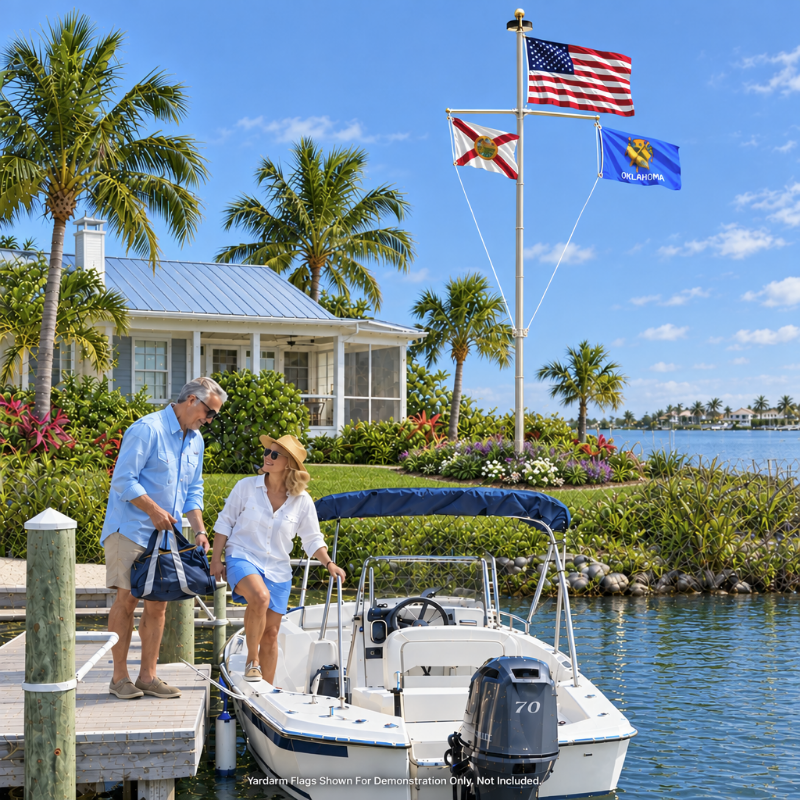
Our 20 Ft Superior 2 Nautical Telescoping Flagpole Kit suits a salt-air property with a maritime display in mind.
Want the full picture on coastal materials first? A durable flagpole guide for coastal homes walks through how salt air treats different pole types.
If corrosion is your main worry, preventing rust on outdoor flagpoles covers the hardware and finish details that matter most.
Salt spray wins against neglected metal. A simple rinse every few weeks, a mild soap wash monthly, and a dry pass after each cleaning keep an aluminum flagpole looking sharp for years.
Coastal salt does not have to shorten your pole's life. Armor Flagpoles builds telescoping poles with 10-gauge 7000-T8 aluminum, stainless-steel hardware, and a 15-year factory warranty. Every kit ships with a matched flag, solar light, and attachments.
Frequently Asked Questions
Can salt spray damage an aluminum flagpole?
Yes, over time. Salt crystals left on the pole hold moisture against the surface finish and can pit the metal and dull the shine. Salt also builds up in flag clips, swivel rings, and pulleys, where it can stiffen movement. Piggotts recommends fresh water rinsing for halyards exposed to salt spray to prevent salt crystal build-up. A quick rinse after coastal exposure is the simplest defense.
Can vinegar remove salt spray from an outdoor flagpole?
Diluted white vinegar can help with stubborn salt deposits and water spots that mild dish soap leaves behind. Mix a small amount of vinegar with warm water, wipe the pole with a soft cloth, then rinse thoroughly with fresh water. Never scrub with an abrasive pad, and never let vinegar sit on the pole. Rinse and dry right after, since any residue left behind works against the finish.
What should you not use to clean an aluminum flagpole?
Skip abrasive pads, steel wool, and harsh household cleaners. High-pressure washing is also a bad idea, since it can damage the surface or finish, which is why a low-pressure garden hose is the safer choice. Multiple industry sources recommend mild dish soap and soft microfiber cloths to protect finish integrity. Stick with warm water, mild detergent, and a soft cloth or sponge.
How often should you rinse a flagpole exposed to salt air?
Rinse with fresh water after any noticeable salt exposure, such as a storm or heavy onshore wind. A light rinse every week or two suits most coastal properties. In heavy salt spray, rinse more often and inspect clips, swivels, and pulleys each time. Check for white residue or sticky hardware, both signs salt is collecting faster than you are rinsing it away.
