

Memorial Flagpole Winter Care: A Step-by-Step Maintenance Plan
Last Updated: November 15, 2026
Quick Summary
Maintain your memorial flagpole in winter with a fall prep session before the first freeze, then short monthly checks from December through March. Lower the flag before ice storms and heavy snow, clear snow from the base with a plastic shovel, and store the flag dry indoors.
- Do a full inspection, cleaning, and hardware check in late fall, before the first freeze.
- Keep monthly winter visits to 15-20 minutes for a visual check, snow clearing, and light test.
- Never chip ice with metal or force a stuck section with tools or heat.
- Clean flags in cold water with mild detergent, then lay flat to dry at room temperature.
- Store flags in a breathable cotton bag in a cool, dry, dark place, never plastic.
Table of Contents
- Why a Memorial Flagpole Needs Its Own Winter Plan
- A Flagpole Winter Maintenance Schedule That Works
- Step-by-Step: Inspecting Pole, Base, and Hardware
- Flag Care in Snow and Ice: Cleaning, Drying, and Preventing Wear
- How to Store an American Flag for the Winter
- Solar Flagpole Light Winter Care
- Protecting Plaques, Wreaths, and Commemorative Components
- Choosing the Right Pole and Kit for Your Memorial Display
- Frequently Asked Questions
Why a Memorial Flagpole Needs Its Own Winter Plan
A memorial flagpole carries meaning that a standard yard pole does not. It marks service, loss, and remembrance, so neglect in winter feels personal.
Freezing temperatures, snow, and ice attack every part of the display. Water works into joints and freezes. Metal contracts. Fabric stiffens and frays. A memorial flagpole left alone from December to March often greets spring with stuck sections, rusted clips, and a torn flag.
Below, we walk through a full winter plan for your memorial flagpole display. You will get a fall prep list, a monthly check schedule, step-by-step inspection tips, and flag storage advice. We also cover solar light care, plaque protection, and safe work habits on icy ground.
A Flagpole Winter Maintenance Schedule That Works
A written schedule beats good intentions. Most winter damage comes from skipped checks, not severe weather. Set two anchors: a thorough fall prep before the first freeze, then short monthly checks through the cold months.
| Timing | Task | Time Needed |
|---|---|---|
| Late fall, before first freeze | Full inspection, cleaning, hardware check | 60-90 minutes |
| December through March, monthly | Visual check, snow clearing, light test | 15-20 minutes |
| After any ice storm | Full re-inspection of pole, base, and flag | 30 minutes |
| First warm week of spring | Deep clean, lubricate, replace worn parts | 60 minutes |
Time Needed
Fall Prep Before the First Freeze
Do the heavy work while your hands still work outside. Lower the pole fully and inspect every section. Clean the flag and let it dry completely. Check the base for loose soil or cracks. Tighten hardware and apply a weather-rated lubricant to moving parts. Test the solar light and clean its panel.
Monthly Checks From December Through March
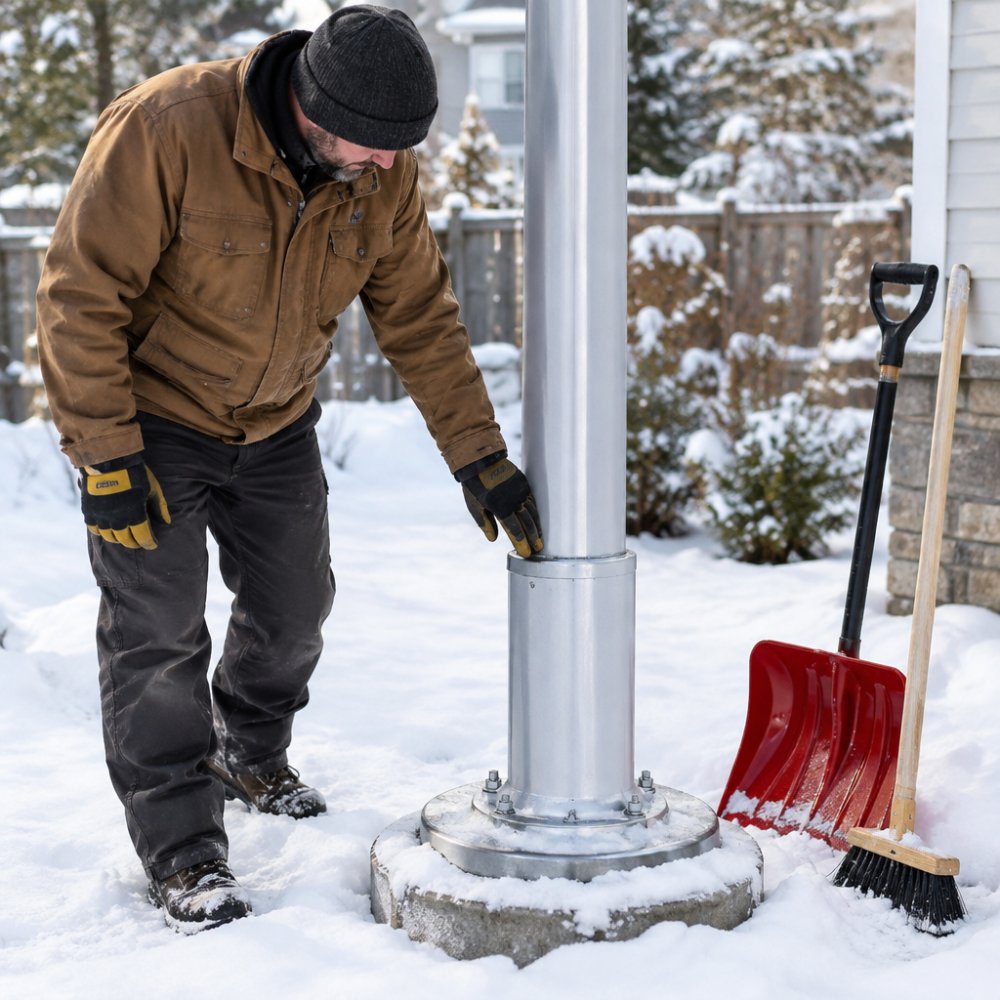
Keep each monthly visit short and focused. Look up the pole for bent sections or loose clips. Clear snow and ice from the base with a plastic shovel. Never chip ice with metal. Test the light after dark. Note anything odd, and fix small issues before they grow.
Step-by-Step: Inspecting Pole, Base, and Hardware
Inspection is the core of flagpole winter maintenance, and it takes less time than most people expect. Work from the ground up, and write down what you find. A simple phone note works fine.
The Ground-Up Inspection
- Check the base and foundation. Look for cracks, tilting, or soil that has heaved upward from frost. A leaning pole usually points to a base problem, not a pole problem.
- Inspect each telescoping section. Lower the pole and look for dents, scratches, or white corrosion spots. Pay close attention to the joints where sections meet.
- Test the locking mechanism. Extend and lower the pole once. Sections should lock firmly and release smoothly. Sticking sections often signal grit or ice inside the tubes.
- Examine clips, rings, and the swivel. Stainless clips should spring back cleanly. Look for rust stains, bent clips, or worn retainer rings.
- Check the finial and topper. Make sure the ball topper is tight. A loose topper can work free in high wind.
For a deeper look at rust prevention, see our guide on preventing rust on outdoor flagpoles. If your base looks unstable, our walkthrough on how to secure a flagpole base covers the fix step by step.
Winter Damage Troubleshooting: Symptom to Action
Most winter problems follow a pattern, and the fix depends on the symptom. Use this guide after any storm.
| Symptom | Likely Cause | What to Do |
|---|---|---|
| Sections will not extend or retract | Ice or grit inside the tubes | Bring the pole indoors to thaw, then wipe the tubes dry and re-test |
| Clips or swivel frozen in place | Freezing rain on hardware | Thaw indoors, dry fully, and apply a weather-rated lubricant |
| Pole leaning after a storm | Frost heave or a loosened base | Do not climb or force it; inspect the base and reset it when the ground allows |
| Cracks at the base collar | Freeze-thaw movement against concrete | Stop using the pole and check the foundation before the next display |
| Solar light dim or dead | Snow on the panel or a cold battery | Clear the panel, then test after dark; a cold battery often recovers |
| Frayed flag or torn heading | Ice weight or high wind | Retire the flag and replace it before the next display |
Safe Work in Icy Conditions
Do not climb a pole, stand on a roof, or reach over ice to free hardware. Falling ice and slick surfaces cause more injuries than pole damage does. Work from the ground, use a step stool only on cleared and dry pavement, and wear gloves with grip. If a problem needs a ladder or a lift, call a professional. A memorial display is not worth a fall.
Watch out: Never force a stuck section with tools or heat. You can bend the tube and void your warranty.
Flag Care in Snow and Ice: Cleaning, Drying, and Preventing Wear
A memorial flag is not a spare piece of fabric. It may have flown at a dedication, a service, or a family gathering, so winter care should protect both the material and the meaning. The practical steps below keep the flag sound, and the handling notes keep the display respectful.
Know When to Lower the Flag
Lower the flag before ice storms, heavy snow, and sustained high wind. If you are unsure, lower it. A flag resting indoors for a day loses nothing, and a torn memorial flag cannot be quietly replaced.
Handle a Memorial Flag With Care
Follow the U.S. Flag Code and any site-specific rules at a memorial, cemetery, or veterans' facility. Those rules take priority over general advice. When you lower a memorial flag, keep it off the ground, fold it respectfully, and carry it indoors in both hands rather than over a shoulder. If the flag is a dedicated or commemorative one, note the date it came down so the record stays complete.
Clean and Dry Without Damage
For routine cleaning, follow these steps:
- Fill a basin with cold water and a few drops of mild detergent.
- Soak the flag for 15 minutes, then agitate gently by hand.
- Scrub stubborn spots with a soft-bristle brush.
- Rinse with cold water until the soap is gone.
- Lay flat to dry at room temperature, away from direct heat.
Never fold a wet flag into storage. Trapped moisture causes mildew and weakens the fabric. Air dry flat, and turn the flag once so both sides dry evenly.
Catch Wear Before It Spreads
Check the fly end and heading each month. Small frays grow fast in wind. Trim loose threads with sharp scissors, and retire a flag that shows heavy wear. A worn memorial flag deserves a respectful replacement and a proper retirement, not another season of strain.
Watch out: Do not machine wash or tumble dry a memorial flag. Heat and agitation can set stains and fray the heading.
How to Store an American Flag for the Winter
If you store an American flag for the winter, do it right, and it will look sharp for years. The goal is dry, dark, and stable. Damp storage is the enemy.
Start with a flag that is completely dry. Fold it in the traditional triangle if you prefer, or roll it loosely around a cardboard tube. Place it in a breathable cotton bag or a clean pillowcase.
Store the bag in a cool, dry, dark place. A closet shelf or an interior cabinet works well. Avoid garages, sheds, and attics, where temperature swings drive condensation.
Label the bag with the date. Before you fly the flag again in spring, unfold it and check for mildew, fading, or new frays.
Solar Flagpole Light Winter Care
Solar flagpole light winter care comes down to two things: panel access and battery behavior. Shorter days and low sun angles cut charging time. Snow on the panel can stop charging entirely.
Clean the solar panel after each snowfall. Use a soft cloth or brush, and never scrape the panel with metal. Check that the light still turns on after dark each month.
Keep a backup illumination plan for long stretches of gray weather. An outdoor-rated cord and timer on a plug-in fixture works well.
For the full picture on nighttime display, read our guide on how to properly light a flag at night. Proper lighting honors the flag and keeps the memorial visible after sunset.
Protecting Plaques, Wreaths, and Commemorative Components
Plaques, wreaths, and other memorial components need their own winter attention. These items often carry names and dates that cannot be replaced.
Wipe plaque surfaces with a soft cloth and mild soap, then dry fully. Apply a thin coat of paste wax made for outdoor metal to slow corrosion.
Wreaths and seasonal tributes should come inside before heavy weather. Damp wreaths hold moisture against the pole and plaque. Store them flat and dry.
Inspect any memorial markers at ground level for frost heave. A marker pushed up by frozen soil can crack or tilt.
Watch out: Do not use rock salt near plaques or the pole base. Salt speeds corrosion on metal hardware and nearby concrete.
Choosing the Right Pole and Kit for Your Memorial Display
If your memorial flagpole is nearing the end of its life, winter is a good time to plan a replacement. Look for a pole built for real weather, with specs you can verify.
The 20 Ft Heavy Duty Superior 2 Telescoping Flagpole Kit includes the pole, a 4×6 U.S. nylon flag, a 566-LED solar light, four stainless steel spring-loaded clips, a ground sleeve, and a flash collar. That kit carries a 15-year pole warranty. We select the flag, light, and hardware to match the specific pole, so you are not hunting for compatible parts.
For a complete memorial setup, view the 20 ft Superior 2 telescoping flagpole kit. Match the pole height to your space and check local display guidelines before you install.

A memorial flagpole deserves more than a quick glance each winter. Build the schedule, inspect the hardware, store the flag dry, and protect the plaque.
Armor Flagpoles builds telescoping poles with 10-gauge 7000 T8 aluminum, a 15-year pole warranty, and clear published specs. Start with our telescoping flagpole maintenance guide to plan the full year, not just winter.
Frequently Asked Questions
Should I leave a memorial flag out in winter?
It depends on the weather and the flag's condition. Watch for ice buildup and sustained gusts. If the flag is wet, frozen, or whipping hard, lower it and bring it inside. Check it after every storm. A clean, dry flag stored properly will last for years of memorial seasons.
How often should I inspect a flagpole during winter?
Check it once a month and after every significant snow, ice, or wind event. Look at the base, the joints, the clips, and the light. Clear snow and ice from the base and the ground sleeve. Look for rust, corrosion, or loose hardware. Catching a small issue early prevents bigger repairs when the ground thaws.
Can solar flagpole lights stay outside in winter?
Shorter days and snow cover can reduce charging. Keep the panel clear of snow and ice, and check the cord for cracks. If the light dims or stops, bring it inside to warm up and recharge. A backup illumination plan helps on dark winter nights.
What is the best way to store a memorial flag for the winter?
Clean it first with mild detergent and cold water, then rinse and air-dry completely. Fold it respectfully and place it in a cool, dry, dark space away from sunlight and moisture. A breathable cotton or canvas bag works well. Avoid plastic bags that trap condensation. Label the bag so the flag is easy to find next season.
